



Keeping your nutrient solution in the right pH range is one of the most important parts of successful hydroponic gardening. While digital pH meters give the most precise readings, a simple liquid pH test kit is an affordable, beginner-friendly way to monitor pH—and it only takes a couple of minutes.
Here’s how to use a pH test kit correctly so you get reliable readings every time.
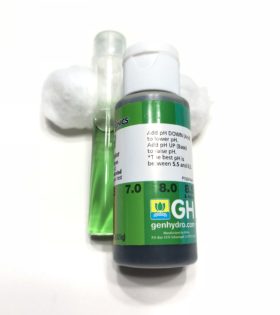
Supplies Needed
Liquid pH Test Kit
A standard hydroponics pH test kit (like the General Hydroponics 8 oz indicator) gives you roughly 90+ tests per bottle and costs far less than a digital meter. It includes the color chart, test vial, and indicator drops.

| My Top Pick | 30,000 Reviews |
How to Measure Hydroponic Nutrient Solution pH With a Test Kit
1. Collect Your Sample
Fill the included test tube about halfway with your nutrient solution.
If the tube doesn’t have a fill line, halfway ensures a consistent reading.
2. Add Indicator Drops
Add 3–5 drops of the pH indicator solution.
Cap the tube and shake gently to mix thoroughly.
3. Compare the Color
Hold the tube next to the color chart on your kit (often printed on the bottle).
Check the sample in good, natural light for the most accurate match.
4. Check Your pH Range
Most hydroponic plants grow best between pH 5.5–6.5, though the optimal range varies slightly by crop.
For specifics, see your guide to the best pH levels for hydroponic plants.
5. Adjust pH If Needed
If your pH is too high or low, use hydroponics-specific pH Up or pH Down solutions.
Add a small amount, mix your reservoir well, and retest until you’re within range.
Is a pH Test Kit Accurate Enough?
Test kits are great for beginners—they’re cheap, reliable enough, and hard to mess up.
However, they’re not perfect. Accuracy can be affected by:
- Lighting
- Drop count
- Color perception differences
- Old or stained test tubes
For pinpoint accuracy, especially in larger or more sensitive systems, an electronic pH meter is worth the upgrade.
FAQ: Measuring Hydroponic pH With a Test Kit
How often should I check my hydroponic pH?
Most systems need daily pH checks, especially deep water culture (DWC) and systems with fast-growing crops.
Smaller reservoirs may require testing twice per day.
Can I reuse the test tube without washing it?
Yes, but rinse it with clean, fresh water after every test.
Staining or residue can skew colors over time.
Why does my pH reading look different depending on the room I’m in?
Lighting dramatically affects color comparison.
Always check pH in bright, natural light or consistent white LED light.
Can I use aquarium pH drops instead?
Not recommended. Aquarium kits often measure different ranges and aren’t calibrated for hydroponic nutrient solutions.
What if my color looks “between” two values?
Choose the closest match, then track how your plants respond over the next day.
pH test kits are approximate tools—slight variation is normal.
How long does the mixed sample stay accurate?
Only a couple of minutes.
The color can drift over time, so check it right after shaking.
Should beginners start with a test kit or a digital meter?
A liquid test kit is the cheapest way to get started, and it works well for small systems.
Upgrade to a digital meter when you want more precision or convenience.
Final Thoughts
A liquid pH test kit is an easy, low-cost way to keep your hydroponic nutrient solution in the right range. While it’s not as precise as a digital pH meter, it’s reliable enough for beginners and small systems—as long as you follow the instructions, test in good light, and stay within the recommended pH range.
Once your garden grows or you want more accuracy, upgrading to an electronic pH meter can make maintenance faster and more consistent. But for now, a simple test kit is more than enough to keep your plants happy and growing strong.



What about if you use colored nutrients like GH’s hydroponic nutes, which I have. Green for veg and pink for flower. The GH ph drops cannot test my solution. I’m guessing the color throws it off. Do you know if they carry a clear nutrient solution?
I’m not sure on any clear nutrients off top. I would recommend picking up a electric pH meter. They are pretty cheap, solve your issue with the coloring, and are more accurate.