


They may not be glamorous, but net pots (a.k.a. net cups) quietly keep your hydroponic system running smoothly. The right ones support your plants, keep grow medium out of your pump, and even help prevent algae. Not all net pots are made the same, though—slot size, lip design, and build quality matter more than you’d think.
Quick Guide: Choose Net Pots in 3 Steps
- Match the size to the plant. 2–3″ for leafy greens & herbs; 3–4″ for midsize plants and 5-6″ for heavier fruiting plants.
- Pick the right slot width. Small/narrow slots for loose mediums (clay pebbles, perlite mixes); wider slots for aeroponics or rockwool cubes.
- Check the lip & fit. A wide, sturdy lip prevents the pot from falling through and makes lifting easier. Add lids if light hits the medium.

Why Net Pots Matter
Net pots do three essential jobs:
- Hold the plant steady so roots can do their thing without the stem wobbling.
- Contain the grow medium (if you use one) so it doesn’t wash into the reservoir damaging pumps and clogging lines.
- Let roots breathe—the open sides give oxygen access and encourage healthy, white root growth.
1) Choose the Right Size Net Pot For Your Hydroponic Garden
Size is about plant mass now and at harvest. Smaller cups are great for compact, shallow-rooted crops; bigger cups add stability for heavier plants.
| Net Pot Size | Best For | Common Systems |
|---|---|---|
| 2″ | Leafy greens, herbs, seedlings | Kratky jars, NFT, small ebb & flow, cloning machines |
| 3-4″ | Larger greens, bushier herbs, small fruiting plants | DWC tote /rafts, NFT channels, Ebb & Flow, Kratky jars |
| 5″–6″ | Heavier fruiting plants (full-size tomatoes, cucumbers) | 5-gal bubble buckets, Dutch buckets (with adapters) |
🌱 Pro Tip: Building a 5-gallon bubble bucket? Look for 6″ net pot bucket lids made for standard 5-gal pails so you get a clean, sturdy fit.
 | My Top Pick | 1,200+ Reviews |
2) Slot Size & Pattern: Keep Medium Where It Belongs
Slots that are too wide let clay pebbles and small media slip through, causing clogs and mess. Slots that are too narrow can restrict young roots and slow early growth. Aim for a pattern that matches your medium and system.

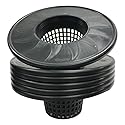
This net pot is a good example of the type I recommend when using grow medium. Narrow/More Slots, Best for loose media (clay pebbles, perlite mixes). Holds media in place, supports stems well.
 | My Top Pick | 250+ Reviews |
Wider/Fewer Slots, Works for aeroponics (often no medium) or when using rockwool cubes that fill the pot.

Quick test: If a single clay pebble can slide out easily when you tilt the empty net pot, the slots are likely too wide for pebble-based setups.
3) Go for a Wider Lip
The lip keeps the cup from falling into the hole and gives you a spot to lift easily when checking the roots. Ultra-cheap pots often have thin or barely-there lips—which can work fine until your plant gets heavy and the cup drops through.
- Choose a net pot with a well-defined, sturdy lip.
- Check rim diameter against your lid or grommet size so the cup seats flat and doesn’t wobble.

4) Material, Color & Build Quality
Material: Most quality net pots are rigid plastic. Thin, soft plastics deform and crack sooner.
Color: Black blocks light better than translucent cups, helping reduce algae.
Reusability: Quality net pots can be clean and reused repeatedly.
Should You Use Net Pot Covers?
If light can hit your moist medium, algae will happen. Algae builds up, dies off and attracts pests. It will for sure result some point in gray mold.
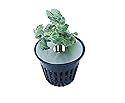
Net pot covers are worth it. They can stop light from reaching the grow medium, helping to keep algae down and debris out—handy for outdoor systems too.
What to Avoid (Common Beginner Pitfalls)
Oversized slots with clay pebbles → media in your pump or NFT channels.
Tiny cups for heavy crops → leaning stems, top-heavy plants, constant propping.
Minimal lip on large cups → pot falls through once fruit adds weight.
Translucent cups in bright systems → green, slimy medium (algae).
Related Guides:
FAQ
What size net pot is best for lettuce and herbs?
2″–3″ net pots are perfect for leafy greens and most herbs in Kratky, NFT, or small ebb & flow systems.
What size net pot should I use in a 5-gallon DWC bucket?
Go with a 6″ net pot bucket lid designed to fit standard 5-gal pails. It gives more media volume and a broader base for plant support.
How do I stop grow medium from falling through?
Pick narrower slot patterns (or cups with a denser grid) when using loose media like clay pebbles. For aeroponics or rockwool cubes, wider slots are fine.
Do I really need net pot covers?
If light reaches the moist medium, you’ll get algae. Lids or light blockers dramatically reduce algae and keep debris out—especially helpful outdoors.
Are cheap net pots okay?
They “work,” but thin plastic and tiny lips can lead to cracked rims, flexing, or pots falling through holes under plant weight. Quality pots last years and save headaches.
Takeaway
Match size to plant weight, pick a slot pattern that suits your medium, and make sure the pot has a sturdy lip. Add lids wherever light hits the medium. A few extra dollars on quality net pots pays you back every time you harvest without unclogging a pump.


Good Day. Can I trasplant n plant to a bigger net pot if the plant gets too big ?
It can sometimes be difficult to transplant into larger net pots but it is possible. If the root system is well developed, it’s best to just place the whole net pot into a larger one, instead of trying to remove the plant from the smaller net pot. Trying to remove the plant can really damage its root system.
What size net pots would you recommend for cabbages and lettuce? In particular Romaine , Bok Choi and Chinese
I typically use 2-inch net pots for lettuce but I typically grow loose leaf and butterhead lettuce. I haven’t grown Bok Choi or Chinese but I would probably recommend a 3-inch net pot for what you’re looking to grow.