


Fresh, vine-ripened tomatoes on demand? Hydroponics makes it possible indoors year-round. Tomatoes are a bit more advanced than lettuce, but once you dial in light, nutrients, and support, they’re very manageable—and seriously rewarding.

Quick How-To: Growing Hydroponic Tomatoes
- Start seeds warm: Germinate in Rapid Rooter or rockwool at 70–80°F with a heat mat. Sprouts in 5–8 days.
- Transplant to system: Move into 5-gal DWC buckets or Dutch (Bato) buckets; add a cage/trellis for support.
- Dial in conditions: Keep 70s°F by day, 60s°F by night; space plants 12–24″; hold pH 5.5–6.5.
- Light them up: Provide 14–16 hrs/day of strong LED or HID light.
- Feed in two stages: Veg = more N; fruiting = more P & K. Add Cal‑Mag to prevent blossom end rot.
- Pollinate indoors: Gently vibrate flowers or use a q‑tip/paintbrush every few days.
- Harvest: Small varieties in ~45–55 days, larger types ~70+ days. Plants can fruit for months.
Pro Tip: Keep a simple log—date, pH, EC/PPM, top‑offs, and plant notes. It speeds up troubleshooting and improves yields over time.
Getting Hydroponic Tomatoes Started
Germinating Seeds
- Use Rapid Rooter or rockwool plugs; keep evenly moist and warm at 70–80°F (heat mat recommended).
- Expect germination in 5–8 days, depending on variety and temperature.
Cloning Tomatoes
Cloning ensures identical traits to a plant you love. Root cuttings in oxygenated water or Rapid Rooter plugs, then transplant to your system.
Transplanting from Soil
Buying a nursery plant skips the seedling stage. Carefully rinse soil from roots and transition gently into hydro. Inspect for pests before transplanting.
Best Hydroponic Systems for Tomatoes

Tomatoes grow large and heavy—choose systems that support size and weight.
- 5-gallon Deep Water Culture (DWC) buckets: Simple and productive for single plants.
- Dutch (Bato) buckets: Great for multiple plants; easy to stake, cage, and plumb for automated feeding.
Support required: Add cages, trellis lines, or stakes early. Net‑pot bucket lids make inserting cages easy.
 | My Top Pick | 1,400+ Reviews |
Temperature Requirements
- Day (lights on): mid‑70s°F
- Night: low‑ to mid‑60s°F
- Too hot or cold? Growth slows and flowers may drop instead of setting fruit.
Plant Spacing
Allow 12–24 inches between plants depending on variety and pruning. Ensure airflow and room to prune, train, and harvest. Movable buckets let you adjust spacing as plants grow.
Light Requirements
- Photoperiod: 14–16 hours/day. Tomatoes are day‑neutral.
- Type: High‑output LED or HID; fluorescents are typically too weak for fruiting.
- Placement: Keep close for intensity without leaf scorch; raise as canopies grow.

| My Top Pick | 4,900+ Reviews |
Recommended pH
Maintain nutrient solution between pH 5.5–6.5 for consistent uptake.
Nutrients for Hydroponic Tomatoes
Vegetative Stage
- Use a nutrient higher in nitrogen (N) with moderate P & K (a simple one‑part “Grow” works).
 | My Top Pick | 650+ Reviews |
Flowering & Fruiting
- Reduce N; increase phosphorus and potassium to support blooms/set. Add Cal‑Mag to prevent blossom end rot.
| My Top Pick | 650+ Reviews |
Advanced growers can fine‑tune with multi‑part programs for more control.
Heavy feeders: Tomatoes drink and eat a lot. Top off daily in buckets or use a drip/Dutch system to simplify frequent feeding.
Pollination Of Indoor Hydroponic Tomatoes

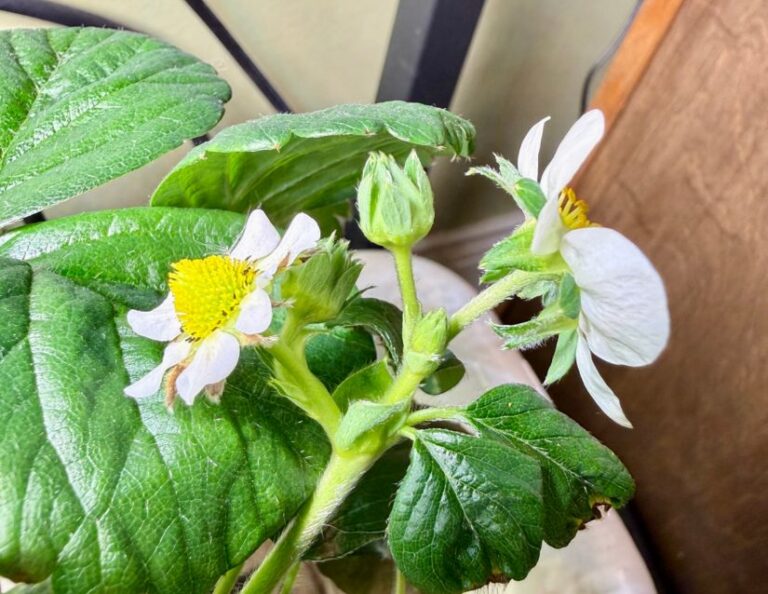
Indoors, flowers need help. Gently shake plants or brush inside blossoms with a cotton swab or small paintbrush every few days. For techniques, see 3 Simple Methods of Hand Pollination.
 | My Top Pick | 3,200+ Reviews |
Days Until Harvest
- Small/fruity types: ~45–55 days
- Larger/beefsteak types: ~70+ days
- With good care, plants can continue producing for many months.
FAQ: Hydroponic Tomatoes
What’s the best hydroponic system for tomatoes?
5-gallon DWC buckets and Dutch (Bato) buckets are top choices—both support big plants and make staking easy.
How many hours of light do tomatoes need?
Run high‑output LEDs or HID for 14–16 hours/day. Tomatoes are day‑neutral, so photoperiod doesn’t trigger flowering.
What pH is best for hydroponic tomatoes?
Keep the solution between 5.5–6.5. Consistency matters more than chasing a single number.
How do I prevent blossom end rot?
Add a Cal‑Mag supplement, avoid big pH swings, and keep solution levels consistent to prevent stress.
Why are my flowers dropping?
Common causes: temperature stress (too hot/cold), low humidity, or inadequate pollination indoors. Stabilize temps and hand‑pollinate.
Final Thoughts
Dial in strong light, stable temps, steady feeding, and solid support, and hydroponic tomatoes will reward you with a long, tasty harvest. Once you’ve got tomatoes going, try peppers next—or expand your system for a continuous supply of fresh produce.



Good afternoon Michael, I am on my second year with a dutch bucket system. Last year I couldn’t grow dust. This year I have 6 tomato plants about 12inches tall and a couple of jalapeno plants about 4 inches tall. I am using dyna grow 7-9-5 at the moment and keeping OH around 6. I was sold a product called hydrobiotics. I have used on two occasions a small cap full of that. Concerns—water starting to fluctuate a lot—I need to do a water change as I have not done that and the plants have been in for 4 weeks—it’s been cold and I don’t have a heater in the greenhouse. Second—I use clay pellets and am starting to see a lot of algae in the buckets along the sides— should I be worried? I am watering 15 minutes on 45 off. so far it seems to be working–suggestions. Thanks in advance
Thanks for reaching out Brett! Glad to hear things are going better for you this year. I really like Dyna Gro’s nutrient products! I would recommend doing water changes every couple of weeks. As it gets warmer, plants will take in more water so it may need to be done more often during these times to keep things balanced.
As far as algae goes, you’re going to always have a little, it’s just good to keep it under control. Try to reduce the light reaching the nutrient solution or grow medium to stop the algae growth.
Thanks for the reply Michael, couple more questions. I have read where people use a little peroxide in their reservoir—any experience with that? And second, I really don’t know much about the hydrobiotics they recommended I use—do you have any suggestions reading these products? Thanks
I don’t have much experience using hydroponic peroxide while my garden is growing. I typically wait until after harvest to clean the system. When it comes to algae control my best recommendation is blocking out the source of light to where it’s growing.
I’m not sure about the hydrobiotices you’re talking about but feel free to send me the info or pictures to my email at info@nosoilsolutions.com and I can take a look.