


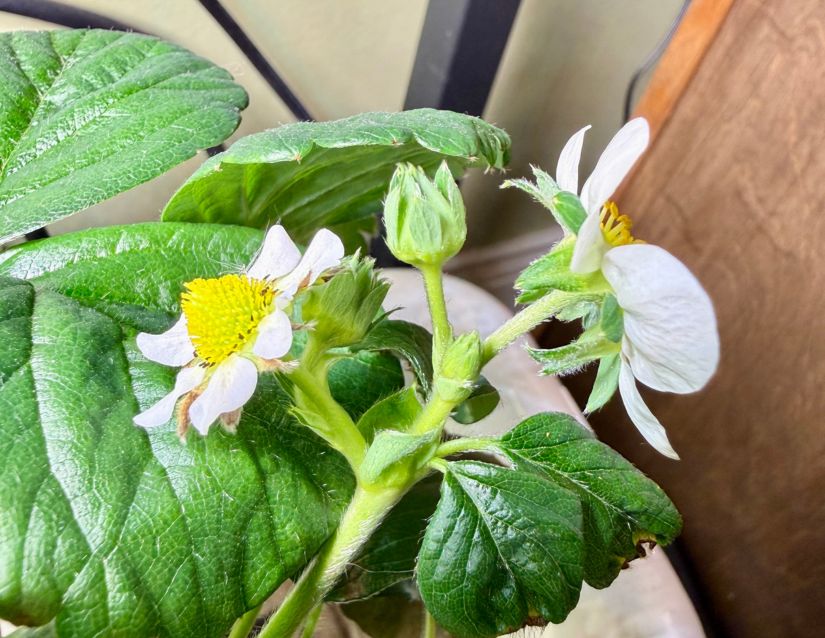

Wondering why your hydroponic strawberries aren’t flowering? The answer may depend on the type of strawberry you’re growing.
Many beginners assume flowering is controlled by fertilizer alone. While nutrients certainly play a role, the biggest factors are the strawberry variety, temperature, light, and plant maturity. Understanding these factors can make the difference between a plant full of green leaves and one covered in delicious strawberries.
Here’s everything you need to know about what makes hydroponic strawberries flower.
The Three Types of Strawberry Plants
Before trying to encourage flowering, you need to know which type of strawberry you’re growing.
Day-Neutral Strawberries
Day-neutral strawberries are the easiest choice for hydroponic gardening, best for indoor hydroponic systems and year-round berry production.
These varieties don’t rely on day length to determine when to flower. Instead, they continue producing flowers and fruit whenever environmental conditions remain favorable.
Popular hydroponic varieties include:
- Albion
- San Andreas
- Seascape (pictured in this article)
- Monterey
- Murano
If you’ve ever seen hydroponic strawberry farms producing berries nearly year-round, they’re almost certainly growing day-neutral varieties.
 | My Top Pick | 775+ Reviews |
🍓 Beginner Tip: Many plant nurseries label day-neutral strawberries as “everbearing.” While both produce berries over an extended season, they’re not exactly the same. True everbearing varieties produce two or three main harvests each year, while day-neutral varieties continue producing flowers and fruit whenever temperatures remain favorable. If you’re building a hydroponic system, day-neutral varieties are almost always the best choice.
How to Induce Flowering In Day-Neutral Strawberries
Day-neutral strawberries flower continuously when they have:
- Healthy roots
- Plenty of light
- Moderate temperatures
- Proper nutrition
There isn’t a special “switch” that makes them flower. Instead, your goal is simply to keep the plants happy and stress-free.
Best for: Indoor hydroponic systems and year-round berry production.
June-Bearing Strawberries
June-bearing strawberries produce one large harvest each year, usually in late spring or early summer.
Rather than flowering continuously, these plants begin forming flower buds during late summer or fall when daylight hours become shorter. Those buds remain dormant through winter before producing fruit the following spring.
Popular June-bearing varieties include:
- Chandler
- Jewel
- Honeoye
- Allstar
- Earliglow
How to Induce Flowering of June-Bearing Strawberries
For June-bearing strawberries, flowering is triggered naturally by:
- Shorter day lengths (typically less than 14 hours of daylight)
- Cooler fall temperatures
- A winter chilling period
Because they rely on seasonal changes, it’s very difficult to make June-bearing strawberries produce continuously indoors. Hydroponic growers should simply allow the plants to follow their natural cycle.
Everbearing Strawberries
Despite their name, everbearing strawberries don’t produce fruit all year long.
Instead, they typically produce two or three flushes of berries each season, often in spring, midsummer, and early fall.
Popular everbearing varieties include:
- Ozark Beauty
- Quinault
- Fort Laramie
How to Induce Flowering in Everbearing Strawberries
Everbearing varieties flower best when:
- Temperatures stay between 65-75°F (18-24°C)
- They receive plenty of light
- The plants remain healthy and actively growing
Unlike June-bearing varieties, they don’t require a long winter dormancy between harvests.
What Factors Cause Strawberries to Flower?
While each strawberry variety responds differently, several factors influence flowering.
1. Plant Maturity
Young plants need time to establish themselves.
Before expecting flowers, your strawberries should have:
- A healthy root system
- A strong crown
- At least 6-8 healthy leaves
Removing the first flowers from young plants often results in larger harvests later because the plant can invest more energy into growing strong roots and crowns first.
2. Temperature
Temperature has a surprisingly large effect on flowering.
Ideal growing temperatures are:
- Day: 65-75°F (18-24°C)
- Night: 50-60°F (10-16°C)
When temperatures rise above about 85°F (29°C), strawberries often produce fewer flowers and smaller berries. High temperatures can also encourage runner production instead of fruit.
3. Light
Light provides the energy needed to build flowers and berries.
For indoor hydroponic strawberries, aim for:
- 14-16 hours of light per day
- Moderate to high light intensity
Even day-neutral strawberries won’t produce well if they don’t receive enough light.
4. Nutrient Balance
Many beginners assume adding more fertilizer will produce more berries. Unfortunately, it often does the opposite.
As plants begin flowering, slightly reducing nitrogen while increasing phosphorus and potassium encourages the plant to invest more energy into flowers and fruit.
Too much nitrogen encourages:
- Large leafy plants
- Runner production
- Fewer flowers
For growers,a gradual shift toward more Bloom during flowering generally produces excellent results while still providing enough nitrogen to support healthy leaf growth.
5. Remove Runners
Runners are baby strawberry plants connected to the mother plant by long stems.
While they’re useful for propagation, they require a significant amount of energy to produce.
If your goal is harvesting berries rather than making new plants, remove runners as soon as they appear. This allows the plant to direct more energy into flowering and fruit production.
Can You Force Strawberries to Flower?
Not exactly. You can’t force a strawberry plant to flower against its genetics or environmental conditions.
Instead, you create the conditions that naturally encourage flowering.
For day-neutral strawberries, this means maintaining ideal temperatures, strong lighting, healthy roots, and balanced nutrition.
For everbearing varieties, consistent growing conditions encourage repeated harvests.
For June-bearing varieties, flowering depends primarily on seasonal cues, making year-round production much more difficult.
Tips for Getting More Strawberries
If you want maximum hydroponic strawberry production, focus on keeping the plant healthy.
✔ Grow day-neutral varieties for hydroponics.
✔ Keep temperatures between 65-75°F.
✔ Provide 14-16 hours of quality light.
✔ Maintain a nutrient solution pH between 5.5-6.5.
✔ Remove runners regularly.
✔ Avoid excessive nitrogen.
✔ Keep roots healthy, white, and well oxygenated.
Healthy plants naturally produce more flowers—and more flowers mean more berries.
Frequently Asked Questions
Why is my strawberry plant growing leaves but no flowers?
The most common causes are:
- Too much nitrogen
- Not enough light
- Temperatures that are too hot
- The plant is still immature
- You’re growing a June-bearing variety outside its normal flowering season
What’s the best strawberry variety for hydroponics?
Most hydroponic growers prefer day-neutral varieties because they continue flowering and fruiting under consistent indoor conditions.
Popular choices include Albion, San Andreas, Seascape, Monterey, and Murano.
Does Bloom fertilizer make strawberry plants flower?
Bloom fertilizers support flowering by increasing phosphorus and potassium, but they don’t trigger flowering on their own.
Whether a strawberry flowers is determined primarily by its genetics and environmental conditions.
Final Thoughts
Getting strawberries to flower isn’t about finding a secret fertilizer—it’s about understanding how your specific variety grows.
If you’re growing hydroponically, day-neutral strawberries are by far the easiest option, producing flowers and fruit almost continuously when given the right combination of light, temperature, nutrients, and care.
By matching your growing conditions to your plant’s natural growth cycle, you’ll enjoy healthier plants, more blossoms, and a much bigger harvest of sweet, homegrown strawberries.


