


Looking for a low-cost, low‑maintenance way to grow fresh food at home? The Kratky Method is a passive hydroponic setup that needs no pumps, no timers, and no electricity—perfect for beginners and off‑grid growers.
What is the Kratky Method?
The method is named after Bernard Kratky, a researcher at the University of Hawaii who demonstrated that plants can thrive in a passive system when water, nutrients, and oxygen are properly balanced.
He developed and studied this passive hydroponics method to show that plants can thrive without continuous aeration, as long as the system balances water, nutrients, and oxygen naturally.
Because it’s simple and affordable, the Kratky Method is popular with:
- Apartment gardeners and small-space growers
- Off-grid and emergency food setups
- Beginners looking for a low-cost entry into hydroponics
How the Kratky Method Works
- No pumps, no power: Plants sit in net pots above a nutrient solution held in a sealed reservoir.
- Root/air balance: An intentional air gap is left between the net pot and the water level so roots can breathe.
- Self-oxygenating drop: As plants drink nutrients, the solution level drops and the air gap grows, supplying oxygen to the roots.
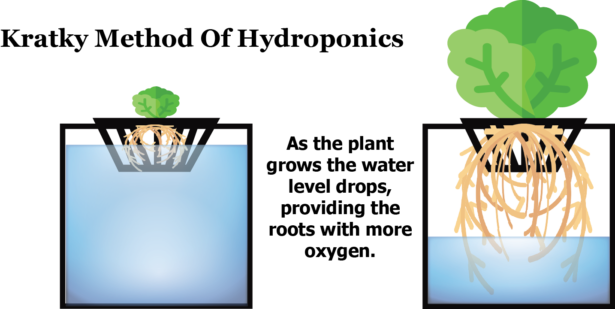
If your plant is ready to harvest when the solution runs out, you’re done. If not, you can top off the reservoir—but always leave an air gap. Submerging the entire root system can suffocate the plant.
Best Plants For the Kratky Method?
The Kratky Method excels with fast, compact growers.
- Best performers: Lettuce, spinach, basil, cilantro, parsley, mint.
- More challenging: Fruiting plants (e.g., peppers, tomatoes) are possible but need larger reservoirs, more frequent nutrient adjustments, and careful root aeration.
- Avoid: Root crops (e.g., carrots, potatoes) which don’t adapt well to this setup.
Pro Tip: For quick wins, start with leafy greens like lettuce. Under decent light, you can harvest in 4–6 weeks.
Advantages of Using the Kratky Method for Home Hydroponics
- No electricity needed: Great for off‑grid, emergency, or low‑infrastructure growing.
- Low maintenance: Few moving parts; mainly monitor water level and nutrient strength.
- Budget‑friendly: No pumps, air stones, or complex plumbing—lower upfront and ongoing costs.
Disadvantages and Common Problems with the Kratky Method
- Best in controlled spaces: Outdoors, rain can dilute nutrients and shift pH. A covered area, greenhouse, or indoor spot is ideal.
- Large plants may grow slower: Bigger crops often benefit from active aeration that pump‑based systems provide.
- Stagnant water risks: Warm, still water can attract pests or encourage root rot. Keep lids tight and maintain the air gap.
- Water quality matters: Start with clean, pH‑balanced water to avoid salt buildup and nutrient lockout.
- Temperature control: Reservoirs can heat up. Shade, insulate, or bury containers to reduce swings.
🌱Tip: For larger fruiting plants, when topping off, add only enough solution to cover ~25% of the root mass and preserve the air gap above.
Is the Kratky Method Right for You?
Choose Kratky if you want a low‑cost, low‑effort system that reliably produces greens and herbs. It’s ideal for beginners, “set‑it‑and‑forget‑it” growers, and off‑grid scenarios. With extra care (larger reservoirs, careful nutrition), some fruiting crops can work too.
Kratky Method FAQs
How long does a Kratky setup last before refilling?
It depends on plant size and reservoir volume. Lettuce often goes from start to harvest on one fill; fruiting plants may need a top‑off every 1–2 weeks.
Does the Kratky Method work indoors?
Yes—indoors is ideal. You avoid rain dilution, pests, and temperature extremes. Pair with a proper grow light for consistent results.
What size container do I need?
It depends on the plant and where you’re growing it. For outside leafy greens, plan 1–2 gallons per plant. For fruiting crops, aim for 5–10 gallons per plant and monitor more closely.
You can grow small plants and herbs in containers as small as glass jars.
Absolutely. It’s one of the simplest hydroponic methods and a great first step into soilless growing.



How far is the net pot submerged into the nutrient solution? I’ve read from 1/2″ to more or less?
It’s more about the roots access to the nutrient solutions. You want the roots touching the nutrient solution but not completely submerged so they still have access to oxygen.