


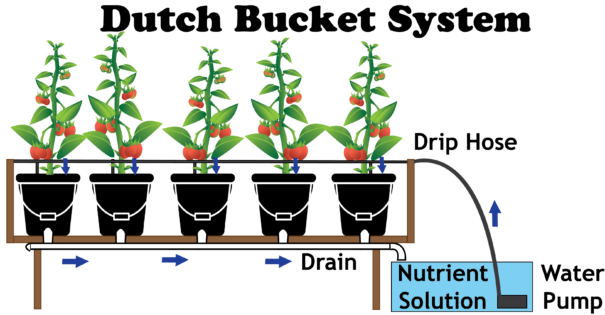
If you’re trying to grow large, heavy-feeding plants in hydroponics and keep running into space or root issues, the Dutch bucket hydroponic system (also called bato buckets) is one of the most practical solutions available.
Home growers and commercial farms widely use this system because it’s simple, scalable, and especially good at handling big, fruiting plants like tomatoes and cucumbers—plants that don’t always behave nicely in other systems.
Below is everything you need to know, explained clearly and without unnecessary complexity.
Dutch Bucket System at a Glance
- Best for: Tomatoes, peppers, cucumbers, squash
- Difficulty level: Beginner to intermediate
- System type: Recirculating drip system
- Space needs: Moderate
- Maintenance: Low to moderate
- Why people use it: Grows large plants efficiently without root crowding
If you’ve ever tried growing tomatoes in a system clearly designed for lettuce, this is where Dutch buckets start to make a lot more sense.
 | My Top Pick | 20+ Reviews |
How Does a Dutch Bucket Hydroponic System Work?
A Dutch bucket system uses individual containers lined up in a row. These containers are usually 3–5 gallon buckets or purpose-built square bato buckets. Most growers place one plant per bucket, though small plants can sometimes share.
Here’s how the system functions:
- A nutrient reservoir holds your water and nutrients
- A water pump sends nutrient solution through a main feed line
- Drip lines or open tubing deliver nutrients to each bucket
- The solution flows through the grow medium and root zone
- Excess nutrient drains out and returns to the reservoir
The key advantage is that the buckets never fill with standing water. This keeps roots well-oxygenated, which supports faster growth and reduces the risk of root rot.
Continuous Flow vs. Drip Emitters
- Continuous flow: Simple, beginner-friendly, fewer clogs
- Drip emitters: More precise, but can clog over time
🌱 Beginner Tip: Many growers start with continuous flow and switch to emitters later if they want finer control.
What Plants Grow Best in Dutch Bucket Systems?
Dutch bucket systems excel at growing large or vining plants that need space, airflow, and steady feeding.
Popular Choices
- Tomatoes
- Peppers
- Cucumbers
- Squash
- Beans
Because each plant has its own bucket and feed line, you can space plants farther apart, improving light exposure and reducing humidity-related issues.
🌱 Beginner Tip: Plan your support early. Fruiting plants get heavy fast, and waiting too long to add trellises or cages usually ends badly.
What Grow Medium Works Best in Dutch Buckets?
The grow medium should hold moisture while still draining well. Dutch buckets rely on steady dripping rather than flooding, so moisture balance matters.
Common Grow Media Options
- Expanded clay (Hydroton): Clean, reusable, excellent airflow
- Perlite: Lightweight, affordable, strong wicking
- Coco coir: Holds moisture well but needs good drainage
Expanded clay is popular because it’s low-maintenance and easy to reuse between grows.
Pros and Cons of Dutch Bucket Hydroponic Systems
Pros
- Ideal for large plants and high yields
- Easy to scale or expand
- Individual buckets simplify pest or disease management
- Less labor during water changes than DWC
- Cost-effective setup
- Excellent root oxygenation
Cons
- Drip lines can clog if not maintained
- Shared reservoir means issues can spread if ignored
- Requires basic plumbing layout
- Plants need support structures
The good news is that each con can be prevented by planning and maintenance.
Is a Dutch Bucket System Right for You?
If you’re frustrated with trying to grow large plants in smaller hydroponic systems, Dutch buckets offer a straightforward upgrade. They strike a balance between control, simplicity, and scalability, without requiring advanced equipment or constant adjustment.
For hobby growers who want serious production in a manageable footprint, this system consistently delivers.
Dutch Bucket Frequently Asked Questions (FAQ)
How many plants should go in one Dutch bucket?
Most growers use one plant per bucket, especially for tomatoes, peppers, and cucumbers. This prevents root crowding and improves airflow.
Do Dutch bucket systems run continuously?
They can. Many systems use continuous flow, while others rely on drip emitters with timed cycles. Continuous flow is simpler and more forgiving for beginners.
Can Dutch bucket systems be used indoors?
Yes. They work well indoors as long as you provide adequate lighting, ventilation, and plant support.
Do Dutch buckets use more water than other systems?
No. Because the system recirculates nutrient solution, water use is efficient and predictable, especially compared to soil gardening.
Are Dutch bucket systems good for beginners?
Yes—especially beginners who want to grow large plants. The system is easier to manage than it looks and avoids many root issues common in other setups.
What’s the biggest mistake beginners make?
Overcrowding plants and underestimating how large they’ll get. Proper spacing and early support make a huge difference.
Final Thoughts
Growing large plants in hydroponics doesn’t have to be complicated. The Dutch bucket hydroponic system proves that with the right layout and consistent feeding, you can grow big, productive plants without overengineering your setup.
If your goal is more produce, fewer root problems, and a system that grows with you, Dutch buckets are one of the most reliable options available.


Always use a DISK filter. No problems with clogged drippers ever.
Thanks for the suggestion Wayne, I’m definitely going to pick one up and try it out!
Do you fill the entire bucket with the hydroton clay or do you have a smaller bucket inside the larger one?
I use 5-gallon bucket net pot lids filled with hydropoton, but you could fill the whole bucket if you wanted. One of the most common grow mediums when using dutch buckets is perlite and you fill the whole bucket.