

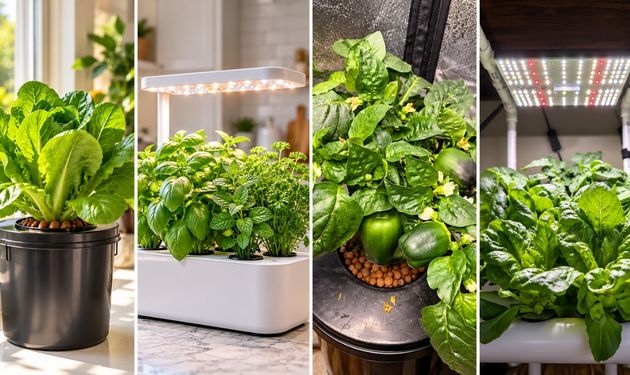

Starting a hydroponic garden doesn’t have to mean complicated products or expensive equipment. Kratky containers, deep water culture buckets, countertop kits, and small NFT systems are four of the easiest hydroponic systems for beginners.
The quick answer:
- Growing your first lettuce with almost no equipment? Start with Kratky.
- Want a simple DIY bucket garden? Try deep water culture (DWC).
- Want everything packaged in one box? Choose a countertop kit.
- Ready for rows of lettuce? Consider a small NFT system.
The right fit depends on what you want to grow, your available space, and how much setup and maintenance you’re comfortable with. The first three are the simplest places to start. NFT needs the most setup and attention, so it comes last. One note: a countertop kit isn’t a separate growing method. It’s a convenient package of equipment, and different kits work in different ways.
Here’s how each option works, what it needs, and what to know before you get started.
1. Kratky: My First Choice for a Simple Start
The Kratky method grows plants in a container of nutrient solution without circulating or mechanically aerating the water.
A net pot holds the plant above the solution. As the plant uses water and the level drops, a humid air gap develops beneath the lid. Part of the root system gets oxygen from that space while the lower roots continue taking up water and nutrients.
That means no pump to install, no tubing to connect, and no pump timer to figure out.
 | My Top Pick | 155+ Reviews |
What You Need
- An opaque container suitable for growing food
- A lid that supports a net pot
- A seedling in a starter plug or suitable growing medium
- Complete hydroponic nutrients
- A way to check pH
- Enough sunlight or a grow light
- Optional: an EC meter to check how concentrated your nutrient solution is
Rough system cost: $10–$30 for a basic DIY container setup, depending on what you already own. Nutrients, testing supplies, and lighting are additional.
Why It’s Beginner-Friendly
Kratky lets you learn the basics with very little equipment. You can watch the roots develop, see how quickly the plant uses water, and get comfortable mixing nutrients before managing a larger garden.
For a first attempt, I’d keep it simple: a few lettuce plants, each in its own container.
What to Watch For
Container size matters. A common starting point for lettuce is roughly a half-gallon to a gallon of solution per plant. Larger containers are more forgiving because the plant has a bigger water supply to draw from.
Start with the right water level. When you first set up, fill the container so the solution just touches the bottom of the net pot. That gives the young roots water right away. As the plant drinks and the level drops, the air gap forms.
Don’t refill an established container to the lid. Once the air gap develops, filling it completely can submerge roots that have adapted to taking in oxygen from the air.
A properly sized lettuce setup can sometimes reach harvest with its original supply of nutrient solution. Small containers, hot weather, and larger plants can make refilling necessary. If you refill, preserve the established air space.
Kratky uses little equipment, but you should still check water levels and plant condition. A tiny jar can run out of water much sooner than you expect.
My recommendation: Choose Kratky if you want to try hydroponics with minimal equipment and start with a small leafy-green crop.
2. Deep Water Culture: A Straightforward DIY Garden
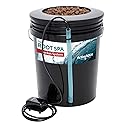
In deep water culture, or DWC, the roots hang into nutrient solution while an air pump and air stone supply oxygen.
A five-gallon bucket is a familiar example, but you can also use a tote with room for several smaller plants.
What You Need
- An opaque bucket or tote suitable for growing food
- A lid with holes for net pots
- An air pump, air stone, and airline tubing
- Seedlings in starter plugs or a suitable growing medium
- Complete hydroponic nutrients
- A way to check pH
- Enough sunlight or a grow light
Rough system cost: $30–$70 for a basic bucket setup with aeration. Lighting, nutrients, and testing supplies are additional.
 | My Top Pick | 1,400+ Reviews |
Why It’s Beginner-Friendly
A basic DWC system has few components. There are no channels to slope or irrigation lines to balance, and you can lift the lid to inspect the roots.
You can also build one yourself with readily available supplies.
What Can You Grow?
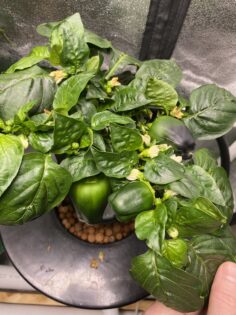
Lettuce and herbs are manageable starting crops. A bucket can also support a tomato or pepper plant, provided you give it enough light, growing space, and support.
Keep in mind that a larger fruiting plant brings more work, even when the system itself is simple.
What to Watch For
The air pump needs to run continuously to provide air to the roots. You’ll also need to check nutrient solution levels and plan for solution changes.
Keep an eye on water temperature. Warm water holds less oxygen, and warm, low-oxygen conditions make root problems more likely. Many growers aim to keep the solution between 65-72°F. Keep the reservoir out of direct sun and away from heat sources.
Think about access before your plants get large. Lifting a lid with a mature tomato plant attached is much harder than lifting a lettuce seedling.
My recommendation: Choose DWC if you enjoy a simple DIY project and want a system you can use for leafy greens or a larger plant.
Next step: Ready to build one? Follow my five-gallon hydroponic bucket guide.
3. Countertop Hydroponic Kits: Convenient for Small Indoor Gardens
A countertop kit brings several pieces of equipment together in one compact setup. Many include a reservoir, grow light, plant holders, and a built-in lighting schedule.
You still care for the plants, but you have fewer equipment decisions to make before starting.

| My Top Pick | 1,800+ Reviews |
Why They’re Beginner-Friendly
These kits are convenient for someone who wants to grow a little lettuce or fresh herbs in the kitchen without building a system or hanging a separate light.
Rough system cost: $50–$200 or more. Many include lighting, so check what comes in the box before comparing the price with a DIY system.
What to Watch For
Look beyond the number of planting holes.
A kit with 12 holes may not have enough room for 12 mature plants of every crop. Growing height, space between plants, and access for cleaning matter more than the biggest number on the box.
Before buying, check:
- How high the light can extend
- Whether the reservoir is easy to empty and clean
- How much room mature plants will have
- Whether replacement plugs and other supplies are easy to obtain
My recommendation: Choose a countertop kit if convenience is your priority and you want a compact garden for herbs or leafy greens.
4. A Simple NFT System: A Good Option for Growing Lettuce
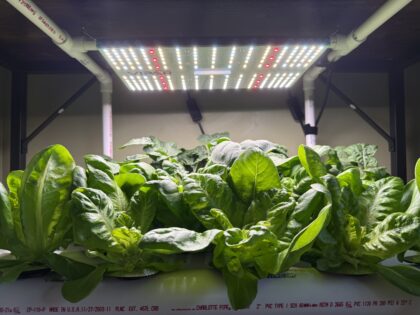
If your goal is to grow several lettuce plants together, a small nutrient film technique, or NFT, system is worth considering.
A pump sends nutrient solution through gently sloped channels. A shallow stream passes along the roots, then drains back into the reservoir to circulate again.
Why It Can Work for Beginners
Once the system is set up correctly, your plants share one reservoir to check and maintain. The rows also make it convenient to inspect and harvest lettuce.
A small, accessible layout keeps the work manageable. You don’t need a tall tower or dozens of planting holes to get started.
Rough system cost: $75–$200 for a small DIY or basic kit setup, excluding lights, nutrients, and testing supplies. Materials and what the kit includes can change that considerably.

| My Top Pick | 1,300+ Reviews |
What to Watch For
NFT requires more setup and closer attention to water flow than Kratky. Check the channel slope, connections, and drainage before adding plants.
True NFT normally uses continuous flow. If the pump stops or roots block a channel, plants can lose access to water quickly.
For your first setup, look for:
- Channels you can open and clean
- Enough space between lettuce plants
- A reservoir that is easy to reach
- Reliable drainage back to the reservoir
- A layout you can inspect for leaks and root blockages
Some pipe-based kits hold deeper pools of water rather than a thin flowing film. Understand how your particular system operates before choosing a pump schedule.
My recommendation: Choose a small NFT system if lettuce is your main goal and you’re comfortable checking a pump and water flow regularly.
Next step: Pair it with my hydroponic lettuce growing guide.
A Quick Comparison of Beginner Hydroponic Systems
| System | Best fit | What makes it manageable | Main consideration |
|---|---|---|---|
| Kratky | Trying hydroponics with a few leafy greens | No pumps or plumbing | You need to preserve an air gap as roots develop |
| Deep water culture (DWC) | A simple DIY bucket or tote garden | Few components and easy access to the roots | The air pump needs to run continuously |
| Countertop kit | A small indoor herb or lettuce garden | Light and growing equipment are often included | Limited growing height and space |
| Small NFT system | Several lettuce plants in rows | Plants share one circulating nutrient supply | Water flow must remain reliable |
Countertop kits come in different designs. They’re a convenient package of equipment rather than a separate hydroponic growing method.
What Makes a Hydroponic System Easy to Maintain?
The easiest garden is one you can comfortably check, clean, and manage.
Before choosing a system, ask yourself:
- Can I reach the reservoir? Adding water and checking the solution should be straightforward.
- Can I clean it between crops? Narrow openings and permanently sealed channels make cleaning harder.
- Does it fit my plants? Lettuce needs much less room than a mature tomato plant.
- Do I have enough light? A system won’t solve an unsuitable growing location.
- Can I check it regularly? Even an automated kit needs attention.
Also, don’t assume the smallest reservoir will be the easiest. Very small volumes leave less room for error when plants use water or conditions change.
A Quick Word on pH
Whatever system you choose, check the pH of your nutrient solution. pH affects how well plants can take up nutrients, and a solution that drifts too far in either direction can slow growth even when the nutrients are all there.
For lettuce and most leafy greens, a common starting target is a pH of about 5.5 to 6.5. Check it when you mix a fresh solution and whenever you top off. If you want a simple way to track your readings, the printable logs in my Dirtless Garden Toolkit are designed for exactly that.
Next step: Read my full guide to hydroponic pH for how to test and adjust it.
Which Hydroponic System Should You Start With?
For your first few lettuce plants, I’d start with Kratky. It gives you a simple introduction without much equipment to buy or assemble.
If you want a DIY setup with active aeration, choose a DWC bucket or tote. If you want the light and growing equipment packaged together, consider a countertop kit.
For several lettuce plants in rows, a small NFT system offers a useful next option, as long as you’re prepared to maintain reliable water flow.
You don’t have to choose the system you’ll use forever. Start with something you can manage, learn from the first crop, and expand when you know what you enjoy growing.
Frequently Asked Questions
What is the easiest hydroponic system to build?
A basic Kratky container is one of the easiest. It needs a container, plant support, nutrient solution, and suitable lighting, with no pumps or plumbing.
What is the cheapest hydroponic system to start with?
A DIY Kratky container is usually the lowest-cost way to begin, since it needs no pump or air stone. DWC costs a bit more because of the air pump, and countertop kits and NFT systems typically cost the most up front. In every case, nutrients, testing supplies, and lighting are additional.
Can I grow hydroponically without electricity?
Kratky doesn’t require electricity for aeration or water circulation. If you have enough natural light, the entire setup can operate without electricity. Indoor grow lights still require power.
Do beginner hydroponic systems need a grow light?
They need enough light for the crop, whether that comes from the sun or a grow light. A location that looks bright to you may still be too dim for healthy plant growth.
Is NFT good for beginners?
A small, well-designed NFT system can work well for beginners growing lettuce. It does require more setup than Kratky, and you need to keep the pump running and channels draining properly.
What is an easy first crop?
Loose-leaf lettuce is a practical starting point. It stays relatively compact, doesn’t need pollination, and lets you focus on learning basic plant care.
Next step: How to grow hydroponic lettuce
Do I need to check nutrients and pH in a simple system?
Yes. Fewer pumps don’t remove the plant’s nutritional needs. Start with complete hydroponic nutrients, follow directions for your crop and growth stage, and check pH. An EC meter can help you monitor how concentrated the solution is.
Do I need to test pH in a Kratky system?
Yes, at least when you mix the solution. Kratky has no pump, but the plant still needs the right pH to take up nutrients. Check it when you fill the container, and again if you top off or the plant looks off-color or stunted.
Give Your First Grow a Clear Plan
Choosing a system is the first step. Knowing how to use it, from mixing nutrients to recognizing problems, is what helps you keep the garden growing.
I created the Dirtless Garden Toolkit to bring those steps together in one practical resource. It covers systems, lighting, nutrients, pH, plant care, and troubleshooting, with crop guides and printable logs to use along the way.
Explore the Dirtless Garden Toolkit
Start small, learn your system, and build from there. Hydroponics doesn’t have to be hard.


