

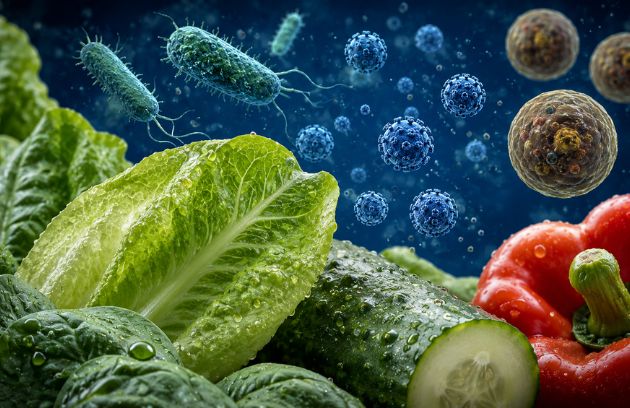

Vegetables are supposed to be one of the healthiest things on your plate. So how does something as ordinary as lettuce end up carrying a parasite or bacterium that makes people sick?
The vegetable usually isn’t the original source. Harmful organisms, pathogens such as Cyclospora, Salmonella and certain strains of E. coli must be introduced somewhere between planting and eating.
The 2026 Cyclospora outbreak linked to processed iceberg lettuce shows how far contaminated produce can travel through a large food system. It does not mean grocery-store vegetables are generally unsafe, but it does make understanding food contamination especially timely.
It also raises an important question: Can growing vegetables hydroponically at home reduce the risk?
The short answer is yes—with an important qualification. Hydroponics can eliminate several common contamination routes, including agricultural soil, manure, field runoff, wildlife and centralized processing. However, hydroponic produce is not automatically pathogen-free. Clean water, clean equipment and proper handling still matter.
What Does “Contaminated Produce” Mean?
Produce becomes contaminated when a harmful bacterium, parasite or virus gets onto or into it during growing, harvesting, processing, transportation or preparation.
“Contaminated” is more accurate than saying the vegetable is “infected.” An infected plant is generally suffering from its own plant disease. A contaminated vegetable may look perfectly healthy while carrying an organism capable of making a person sick.
Human pathogens associated with fresh produce include Cyclospora, Salmonella, harmful E. coli, Listeria, norovirus and Cryptosporidium. They do not spontaneously appear because a plant is grown in soil or hydroponically. They must enter from another source.
1. Contaminated Water
Water is one of the most important contamination routes because one source may touch an entire crop.
Agricultural water can be affected by sewage, livestock, wildlife, flooding or stormwater runoff. It may then contact vegetables through irrigation, spraying, washing, cooling or equipment cleaning.
Leafy greens are especially vulnerable. Their folds and uneven surfaces can trap contaminated water, and they are commonly eaten raw. There is no final cooking step to kill pathogens.
The hydroponic difference
A home hydroponic grower can start with potable tap water and keep it inside a covered reservoir. This removes exposure to field runoff and floodwater.
Hydroponics does not make unsafe water safe, though. Untreated well water, collected rainwater, dirty storage containers and contaminated hoses can still introduce pathogens.
Recirculation also presents a unique concern. If contamination enters an NFT or DWC reservoir, the moving water may carry it to multiple plants and growing channels.
2. Manure and Animal Waste
Many harmful organisms live in the intestinal tracts of animals and leave the body through feces. They can reach vegetables through contaminated soil, manure, runoff, dust or direct animal contact.
Sources include improperly composted manure, livestock runoff, wildlife entering fields, birds, rodents and contaminated floodwater. Animal waste can carry Salmonella, harmful E. coli, Cryptosporidium and other organisms—even when the animal appears healthy.
The hydroponic difference
Standard mineral-based hydroponic nutrients do not require manure. Indoor systems also separate plants from agricultural soil, livestock and most wildlife.
That removes two major field-related risks. But indoor systems can still be exposed to mice, flies, cockroaches and household pets.
3. Contaminated Seeds and Growing Materials
Sometimes contamination arrives before the plant enters the system.
Seeds, seedlings, propagation plugs and grow media pass through manufacturing, packaging, shipping and storage. During that journey, they can potentially encounter unsafe water, animals, dirty equipment or improper handling.
Raw sprouts require special attention because their warm, humid growing conditions also encourage bacterial growth. If a seed carries Salmonella or harmful E. coli, those bacteria can multiply during sprouting. Mature hydroponic lettuce is not the same as raw sprouts, but clean inputs still matter.
In a 2021 Salmonella outbreak associated with commercial hydroponic leafy greens, investigators found that growing media had been stored outdoors without adequate protection from animals, bird droppings or runoff. Testing did not prove the media caused the outbreak, but the FDA identified its storage as a potential contamination route.
Reduce the risk by:
- Buying seeds and seedlings from reputable suppliers
- Storing hydroponic grow media in clean, dry containers
- Keeping supplies off the floor
- Discarding materials exposed to rodents, droppings or flooding
- Cleaning reusable trays and net pots between crops
4. People, Tools and Equipment
People can introduce contamination without realizing it. Someone might touch a plant after using the bathroom, handling raw poultry, cleaning animal waste or touching a contaminated surface.
Pathogens can then move to seeds, reservoir water, channels, scissors, harvest containers or kitchen surfaces.
Hydroponic equipment can also collect roots, plant debris and biofilms. A quick rinse may remove visible dirt without fully cleaning the surface.
Pay particular attention to reservoirs, pumps, tubing, NFT channels, net pots and harvesting tools. Clean the system between crops, when it is empty and easy to access. Our guide to cleaning a hydroponic system walks through the process.
The 2021 commercial hydroponic outbreak is an important reminder. FDA investigators detected a type of Salmonella in an active production pond, although it was not the outbreak strain. They also identified concerns involving water management and sanitation. The exact contamination route was never confirmed.
The takeaway is not that hydroponics creates Salmonella. Salmonella must be introduced from an outside source—but shared water and equipment may spread it after it gets inside.
5. Harvesting, Processing and Transportation
A vegetable can leave the farm clean and become contaminated later. That can happen during harvesting, cutting, washing, packaging, transportation, grocery-store handling, restaurant preparation or food preparation at home.
Commercial farming is not automatically unsafe. Large farms and processors often have extensive sanitation and testing programs. The challenge is scale.
Produce from different fields may be combined. Shared equipment handles large quantities, and a contaminated batch can reach numerous stores and restaurants before anyone recognizes the problem. Scale may not cause the original contamination, but it can dramatically increase its reach.
The home hydroponic difference
Packaged lettuce may travel through a harvest crew, processor, packager, distributor, store and restaurant before reaching you.
Homegrown lettuce has a much shorter trip:
Hydroponic system → clean scissors → kitchen → plate
You know where the water came from, which inputs were used, who touched the plants and when the system was cleaned. If you are ready to try it, see How to Grow Hydroponic Lettuce.
Is Hydroponic Produce Safer?
Properly maintained hydroponic produce can have fewer opportunities for contamination. The grower controls more of the environment while avoiding agricultural soil, manure, outdoor runoff, much of the wildlife exposure, centralized processing, and long distribution chains.
Still, no growing method guarantees pathogen-free vegetables.
| Contamination route | Field-grown produce | Indoor home hydroponics |
|---|---|---|
| Soil and manure | Possible | Usually eliminated |
| Outdoor runoff | Possible | Usually eliminated |
| Wildlife or pets | Possible | Greatly reduced |
| Unsafe source water | Possible | Usually eliminated |
| Dirty hands or tools | Possible | Still possible |
| Centralized processing | Common for packaged produce | Eliminated |
| Recirculating water spreading contamination once introduced | Not applicable | Possible |
| Guaranteed pathogen-free | No | No, just greatly reduced. |
The real advantage of hydroponics is not immunity. It is control.
Home Hydroponic Food-Safety Checklist
- Begin with potable water and clean equipment.
- Buy seeds and seedlings from reputable sources.
- Store growing media in clean, dry containers.
- Keep the reservoir covered.
- Wash your hands before maintenance or harvesting.
- Keep pets and pests away.
- Remove dead roots and decaying plant material.
- Clean the system between grows.
- Harvest with clean scissors and containers.
- Keep produce away from raw meat and dirty surfaces.
- Rinse vegetables under clean running water.
- Never use soap, bleach or household cleaners on produce.
Frequently Asked Questions
Can hydroponic vegetables carry Salmonella?
Yes. Salmonella can enter through contaminated water, seeds, growing materials, animals, hands or equipment. It does not originate from the plant or nutrient solution.
Can Cyclospora get into a hydroponic system?
Potentially. It would need to be introduced through contaminated water or fecal material from an infected person. It does not spontaneously develop in a reservoir.
Does washing vegetables remove every pathogen?
No. Rinsing under clean running water can reduce dirt and some microorganisms, but it cannot guarantee complete removal. Do not wash vegetables with soap or household cleaners.
Should homegrown hydroponic lettuce be washed?
Yes. Homegrown produce has fewer handling steps, but it should still be rinsed under clean running water and handled with clean hands and utensils.
More Control From Seed to Plate
No growing method can guarantee completely pathogen-free produce, but hydroponics gives home growers greater control over how their food is grown and handled. By using clean water, storing supplies properly, keeping equipment sanitary and practicing safe harvesting, you can eliminate many common contamination routes and enjoy a shorter, more transparent journey from seed to plate.


What are the best 1 gal containers to use for hydroponics that are covered to prevent light from entering through the container walls and shining on the nutrient solution?
Hey Tim! The best 1-gallon container would be a black bucket. Something like this: https://amzn.to/4xuls3F