


The Flora Series from General Hydroponics is one of the most well-known three-part hydroponic nutrient systems ever made. It has been used for decades by home growers, commercial operations, and even research institutions.
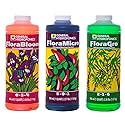
The system consists of three separate bottles—FloraMicro, FloraGro, and FloraBloom—that are mixed together in specific ratios depending on the plant’s growth stage. When combined correctly, they provide all primary, secondary, and micronutrients your plants need in a hydroponic system.
The key word there is correctly.
With three-part nutrients, mixing order matters.
 | My Top Pick | 7,500+ Reviews |
Quick Answer: Mixing Order Matters
When mixing the Flora Series, always add the nutrients to water in this order:
- FloraMicro (always first)
- FloraGro
- FloraBloom
Never mix the concentrates together before adding them to water.
Before You Start Mixing
Before adding any nutrients, take a minute to set yourself up for success.
Checklist before mixing:
- ✅ Clean reservoir (no algae, residue, or cleaners)
- ✅ Fresh water added first
- ✅ Measure water in whole gallons for easy dosing
- ✅ Feeding schedule on hand (General Hydroponics chart)
How much of each part you add depends on the plant’s life stage (seedling, vegetative, flowering). Always follow the official feeding schedule and avoid guessing.
🌱 Beginner Tip: Three-part nutrients give you flexibility, but accuracy matters more than creativity. Measure carefully.
Step-by-Step: How to Mix Flora Series Nutrients
Step 1: Add FloraMicro (Always First)

FloraMicro must be added to fresh water before anything else. This is non-negotiable.
FloraMicro supplies:
- Nitrogen
- Potassium
- Calcium
- Iron and trace micronutrients
These elements form the foundation of your nutrient solution. Adding other nutrients before Micro can cause nutrient lockout or precipitation.
How to do it:
- Measure the exact amount needed for your water volume
- Add to the reservoir
- Stir thoroughly
- Let it circulate for 1–2 minutes
Hard water note:
If your tap water is very hard, use FloraMicro Hardwater instead of the regular version.
Step 2: Add FloraGro

FloraGro supports:
- Vegetative growth
- Strong stems
- Leaf development
- Root structure
It provides nitrogen, phosphorus, potassium, and secondary minerals that push leafy growth during the vegetative stage.
How to do it:
- Measure precisely
- Add to the reservoir
- Stir well
- Allow a short mixing pause before the final step
Step 3: Add FloraBloom
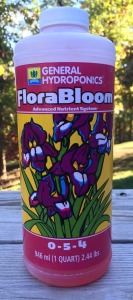
FloraBloom is higher in:
- Phosphorus
- Potassium
- Magnesium
- Sulfur
This formula supports flowering, fruiting, essential oil production, and overall plant quality.
How to do it:
- Measure the required amount
- Add to the reservoir
- Mix thoroughly until fully dispersed
Final Step: Check and Adjust pH
Once all nutrients are mixed, check your pH.
Ideal hydroponic pH range:
- 5.5 – 6.5 (most plants thrive here)
Adjust using pH Up or Down as needed. Nutrients can shift pH slightly, so always check after mixing.
Related 🔗: How To Adjust The pH Of Your Nutrient Solution
 | My Top Pick | 8,200+ Reviews |
Ongoing Maintenance Tips
- Nutrients are typically mixed once per week
- Between reservoir changes, top off with plain water only
- Re-check pH after topping off
- Avoid constantly adding more nutrients unless readings confirm depletion
🌱 Beginner Tip: More nutrients does not equal faster growth. Overfeeding is one of the most common beginner mistakes.
Why Use a Three-Part Nutrient System?
Pros:
- Full control over plant nutrition
- Works with nearly all hydroponic systems
- Adaptable to many plant types
- Proven, long-term reliability
Cons:
- Slightly more complex than one-part nutrients
- Requires careful measuring and mixing order
For growers who want flexibility without jumping into advanced nutrient chemistry, the Flora Series sits in a very comfortable middle ground.
Frequently Asked Questions
Can I mix FloraGro, Micro, and Bloom together first?
No. Never mix concentrates together. Always add each part separately to water.
What happens if I add them in the wrong order?
You risk nutrient lockout, precipitation, and reduced nutrient availability—even if your measurements are correct.
Do I need all three bottles?
Yes. Each bottle provides different nutrients. Skipping one creates deficiencies.
Is the Flora Series beginner-friendly?
Yes—as long as you follow the mixing order and feeding schedule. It’s one of the most forgiving multi-part systems available.
Final Thoughts
The General Hydroponics Flora Series has stood the test of time for a reason. When mixed correctly, it delivers consistent, predictable results across a wide range of plants and systems. While it requires a bit more attention than single-part nutrients, the payoff is flexibility and control without unnecessary complexity.
Take your time, measure accurately, follow the order—and your plants will do the rest.




What are these “exact amounts” you keep talking about in the article? It would be helpful for you to specify the amount of each nutrient to add.
Hey Paul. The amounts actually vary depending on the amount of water your using and the strength that you want your nutrient regimen to be. Here is a link to the feeding chart for general hydroponics.
Do you know for how long the mixed solution is stable for? I mixed up enough into 2L of water (about half a gallon) and only used half of it. Can I store it in a cool dark place and if yes, for how long? I couldn’t find the answer on the product website… Thank you so much!
I’m not really sure exactly how long it’s good for after mixing. You definitely would want to store it in a dark clean container, but I would really recommend only mixing what you plan on using immediately. The rich stagnant nutrients is going to be an invitation for the growth of things you don’t want to grow.
Hello Michael,
I recently ordered a General Hydroponics 3 pack including FloraMicro, FloraGrow, and FloraBloom, anticipating that these would be essentially all I might need as I take essentially my first steps into hydroponic gardening. At the same time I certainly understand that there would likely occur additional expenses. This being the case, I’d certainly not be surprised to find that some other nutrient additives might be used for tweaking plants further down the road.
But then last night while having a look at the General Hydroponics website and searching for their recommendations for how to use the three base nutrients, I stumbled across the “Flora Series Recirculating Program”, a URL which your website also points to. In addition to the 3 Base Nutrients, I encountered quite a number of additional additives, which VERY quickly racks up a serious expense by comparison to the Base Nutrient trio.
Making up the additional list are RapidStart, Liquid KoolBloom, Floralicious Plus, FloraKleen, Armor Si, Diamond Nectar, FloraBlend, CALIMAGIc, FloraNectar, and Dry KoolBloom.
My main question boils down to this. Are the three base nutrients (FloraMicro, FloraGrow, and FloraBloom) sufficiently up to the task of creating proper yields of vegetables…or is this array of additional nutrients really needed, as would be suggested on the General Hydroponics website? Many thanks in advance!
Hey Keith! FLoraMirco, FloraGrow and FloraBloom are base nutrients, and depending on what your growing are oftentimes all you NEED for your hydroponic garden, especially if you’re just growing leafy greens. The other products are supplements which help increase plant functions giving them a boost. Some vegetables like tomatoes and peppers will suffer from blossom end rot which can be prevented with more calcium in your nutrient regimen and can be fixed by adding some calimagic.
This General Hydroponics page lets you know which each of the supplements helps with. As you can see most of them are boosters or enhancers. Hope that helps but just shoot me an email if you need any further assistance!
Many thanks! The idea of having to invest that much more money into what’s currently a fledgeling project I found to be less than appealing. Having done quite a lot of soil-based gardening during the past several years, I definitely understand the need for calcium in tomatoes and peppers…and the likelihood that a calcium supplement would almost certainly be necessary. Strangely, I currently live on top of serious beds of limestone very near the Ohio River, which easily provide sufficient calcium. All of that limestone, however, comes at the cost of having very high ph levels. When I mixed the water and nutrients most of a week ago, I was quite uneasy when I saw the ph level coming in at around 5…and having to up the ph, when I’ve become so used to fighting to bring it down. In any case, thank you again for helping to clarify my concern. And thank you also for your offer of assistance should I run into future problems.