

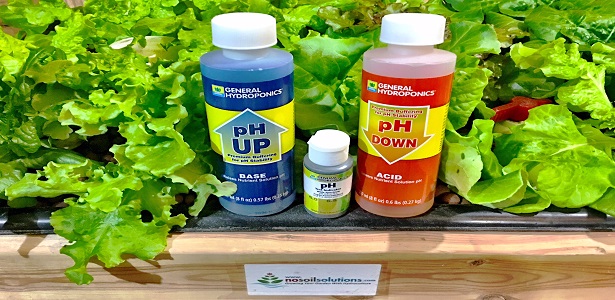

Proper pH levels are the key to success of hydroponic gardening. If your pH drifts too high or too low, your plants can’t absorb the nutrients they need—no matter how much you feed them. This problem, called nutrient lockout, can quickly stunt growth or even kill your plants.
The good news? Adjusting pH is quick, simple, and something you’ll get really good at with just a little practice.
Supplies You Will Need To Adjust Hydroponic pH |
||
|---|---|---|
| pH Meter – There are a few different ways to measure the pH of your nutrient solution, but I prefer to use an electronic pH meter for accuracy and convenience. | 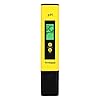 |
View Product |
| pH Up and Down– There are several companies that make products to adjust the pH of your nutrient solution, many of them are just called pH up and Down. I typically use pH up and down from General Hydroponics. |  |
View Product |
How to Adjust pH in Hydroponics
The easiest and most reliable method is using pH Up and pH Down products made for hydroponics. These solutions contain buffers that help keep your pH stable, reducing the need for constant tweaking.
Step-by-Step pH Adjustment
- Measure the pH. Calibrate your meter first, then test your nutrient solution to see if you need to raise or lower the pH.
- Add pH Up or Down. Start with 2–3 ml per gallon of nutrient solution.
- Mix well. Stir thoroughly and wait 15 minutes for the solution to stabilize.
- Retest. Repeat small adjustments until your pH is in the desired range (usually 5.5–6.5).
- If you overshoot, just use the opposite product to bring it back.
 | My Top Pick | 8,200+ Reviews |
What’s the Best pH for a Hydroponic Garden?
Most hydroponic plants thrive in a pH range of 5.5 to 6.5. Staying in this “sweet spot” ensures your plants can take in the full buffet of minerals you’re serving them. Some crops have more specific preferences, so for a crop-by-crop breakdown,
🌱 Pro tip: In the beginning, measure your pH once a day until you understand how your system behaves. Some hydroponic methods are more stable than others.
Hydroponic pH Range Chart
Here’s a quick reference for the ideal pH ranges of some popular hydroponic crops. Keeping your nutrient solution in these ranges helps maximize nutrient absorption and plant health.
| Plant | Optimal pH Range |
|---|---|
| Lettuce | 5.5 – 6.0 |
| Spinach | 6.0 – 7.0 |
| Tomatoes | 5.5 – 6.5 |
| Cucumbers | 5.5 – 6.0 |
| Strawberries | 5.5 – 6.5 |
| Peppers | 5.5 – 6.0 |
| Herbs (Basil, Mint, etc.) | 5.5 – 6.5 |
Why pH Adjustment Matters
When pH slips outside the ideal range, nutrient molecules become “locked” in the solution, making them unavailable to your plants. The longer your pH stays off, the worse the deficiency gets—yellowing leaves, slow growth, and eventually, dead plants. That’s why testing and adjusting pH promptly is critical.
Natural (Temporary) pH Adjustments
No pH Up or Down on hand? You can use household items as an emergency fix:
- Lower pH: White vinegar or lemon juice.
- Raise pH: Baking soda.
❗️Important: These are short-term solutions only. They don’t contain pH buffers, so levels can swing quickly. Switch to proper hydroponic pH products as soon as possible.
Related Guides
- Top 5 pH Meters For Hobby Hydroponics
- Hydroponic Nutrients: Beginner’s Guide
- How To Maintain A Hydroponic Reservoir
- How To Calibrate Your Hydroponic pH Meter
Final Thoughts
pH management is one of the simplest but most important skills in hydroponics. Keep your nutrient solution between 5.5 and 6.5, test regularly, and adjust promptly. With a little practice, it’ll become second nature—and your plants will thank you with faster growth and bigger yields.
FAQs About Hydroponic pH
How often should I test pH?
Daily at first. Once your system is stable, every 2–3 days is fine.
Why does my pH keep rising?
Common causes include plant nutrient uptake, evaporation, and microbial activity. Regular testing keeps this in check.
Final Thoughts
pH management is one of the simplest but most important skills in hydroponics. Keep your nutrient solution between 5.5 and 6.5, test regularly, and adjust promptly. With a little practice, it’ll become second nature—and your plants will thank you with faster growth and bigger yields.



Your teaching on spacing and ph adjusting is indeed very helpful. I have had a hydroponic grow room for two or three years and I am always learning something new that helps me be a lot more efficient with growing methods. To check ph I have been using those little test tubes where I add three or four drops to the water in the tube and compare it with the color on the little bottle. This has worked fairly well for me. But I do have a ph Meter range 0.00-14.00 but I have not used it because I can’t figure out how to calibrate it. I look forward to further great hints from you. Thank you.
Wally.
Thanks for the feedback Wally, I’m glad I was some help! I will shoot you an email with information on how to calibrate that pH meter.
Hello Dear thank you for the great information I want to start a small hydroponic garden too and by garden i mean few karatky bottles .. but I am having too much trouble mixing my solutions because i never get the right amount of salt ppm and ph , and when i use the solution the roots of my plants turn very soft but no change in color would you please advice me what to do? but if you do not have time to answer me ..Can you please shoot me the same e-mail?
Hey Rasha. What kind of nutrient solution are you using and are you measuring the pH often?
Mike:
I notice that on August 13, 2019, you said you were sending me an email on how to calibrate my PH Meter. I realize this is now some time ago. I took that meter and put it away until I felt I could learn how to use it. So I just got it out again a couple of days ago. I don’t know what happened here but I don’t ever remember getting such an email. I don’t even remember reading your reply about all of this. But then I have been known to miss a lot of things and I have no doubt that you did email me and somehow I missed it. So be that as it may, could I please again ask you to send me that e-mail on calibrating my PH Meter. I promise that this time I will not miss it. I apologize and I thank you.
Wally.
Hey Wally, Here is an article I have about calibrating an electronic ph meter.