

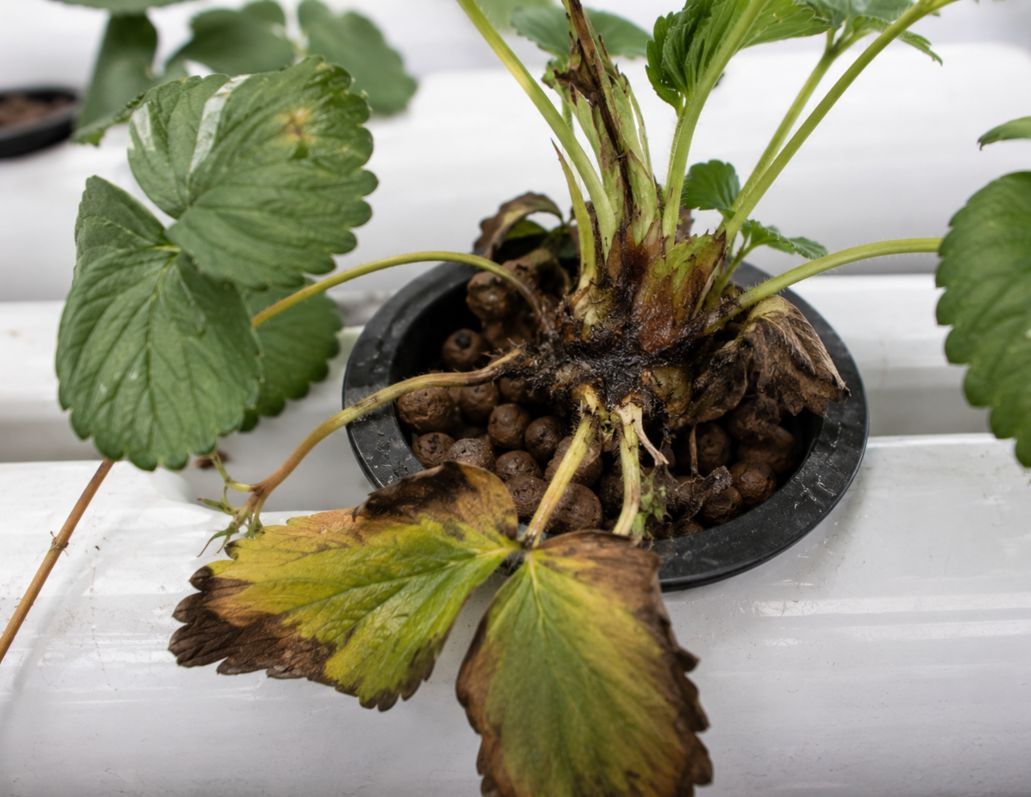

Strawberry crown rot is one of the fastest ways to lose an otherwise healthy hydroponic strawberry plant. One day, your plant looks great. A few days later, the leaves are drooping, the crown is turning brown, and the plant is beyond saving.
The good news? Crown rot is usually preventable once you understand what causes it.
This guide will show you how to identify crown rot early, what causes it in hydroponic systems, and how to keep your strawberry plants healthy for the long haul.
Quick Answer: What Causes Strawberry Crown Rot?
Crown rot occurs when the crown of the strawberry plant stays too wet for too long.
The crown is the thick stem-like section where the roots meet the leaves. When constantly exposed to moisture, pathogens such as Pythium, Phytophthora, and other fungi can attack the tissue, causing it to rot.
In hydroponic systems, the most common causes are:
- Crowns sitting too low in the system
- Constant splashing on the crown
- Poor airflow
- Warm nutrient solution
- Dead roots and organic debris
- Lack of beneficial bacteria
How to Identify Crown Rot
Early detection can save your plant.
| Healthy Strawberry Crown | Crown Rot Symptoms |
| ✅ Firm | ❌ Wilting leaves despite adequate water |
| ✅ Light green, white, or tan | ❌ Yellowing older leaves |
| ✅ Dry to slightly moist | ❌ Stunted growth |
| ✅ Producing new leaves regularly | ❌ Brown or black discoloration at the crown |
| ❌ Soft or mushy tissue | |
| ❌ Foul smell | |
| ❌ Plant collapse |
If the crown feels soft when gently squeezed, the plant is usually in serious trouble.
Why Hydroponic Strawberries Are Vulnerable to Crown Rot
Strawberries naturally prefer a dry crown.
Many beginners accidentally plant strawberries too deep, allowing the crown to sit inside the humid environment of the growing channel or net pot.
This becomes especially common in:
- NFT systems
- DWC systems
- Rain towers
- Vertical towers
While the roots love moisture, the crown prefers to stay above it.
Think of the crown as the “heart” of the plant. Keep the roots wet and the crown dry.
How to Prevent Strawberry Crown Rot
1. Keep the Crown Above the Moisture Zone
This is the single most important step in preventing crown rot.
When planting strawberries:
- Position the crown above the net pot.
- Allow only the roots to extend downward.
- Avoid burying the crown in grow media.
If you look at the plant from the side, the crown should be visible.
🌱 Pro Tip: If you’re unsure whether your crown is too low, it probably is. Remember that just the bottom of the roots needs access to water.
2. Avoid Constant Splashing
Some hydroponic systems create water droplets that repeatedly splash the crown.
Over time, this keeps the tissue continuously wet.
Check for:
- Drip Systems– Dripping return lines
- Aeroponics– Water spraying upward
- Deep water culture– Excessive bubbling directly beneath the crown
- NFT– Water flow too high
Adjust your system so water reaches the roots without soaking the crown.
3. Improve Airflow
Moving air helps keep strawberry crowns dry and reduces the humid conditions that encourage disease.ase.
A small oscillating fan can:
- Reduce humidity around the plants
- Dry excess moisture on crowns and leaves
- Strengthen leaves and stems
- Improve overall plant health
- Lower disease pressure
Good airflow is one of the easiest and most effective ways to prevent fungal issues in hydroponic strawberry systems.
4. Maintain Proper Nutrient Temperatures
Warm water encourages pathogens. Aim for nutrient solution temperatures between:
65°F and 72°F (18°C–22°C)
When temperatures rise above 75°F, the chances of disease increase significantly.
Warm water also holds less dissolved oxygen, which can stress roots and create favorable conditions for disease-causing organisms.
5. Use Beneficial Bacteria
Many hydroponic growers add beneficial bacteria to their nutrient solution to support root health and discourage harmful pathogens. Think of them as “good microbes” that help protect the root zone.
I would recommend using a supplement containing Bacillus species.
They won’t fix poor growing conditions, but they can provide an extra layer of protection when combined with proper temperatures, good airflow, and keeping the crown dry.
 | My Top Pick | 3,300+ Reviews |
6. Remove Dead Roots
Dead roots and decaying plant material can become a breeding ground for pathogens. As organic matter breaks down, it creates an environment where disease-causing organisms can multiply and spread throughout the system.
During routine garden maintenance:
- Inspect roots regularly.
- Trim brown, mushy roots.
- Remove plant debris from channels and reservoirs.
Healthy roots should be white or cream-colored and feel firm to the touch.
While crown rot begins at the crown, poor root-zone hygiene can increase disease pressure throughout the entire system and make outbreaks more likely.
Are New Roots Growing From the Crown a Problem?
Not necessarily.
Strawberries often produce adventitious roots, which are roots that emerge directly from the crown.
This commonly happens when:
- Humidity is high
- Plants are transplanted
- Roots have been pruned
- Crowns are exposed to moisture
White root growth emerging from the crown is usually normal.
However, if the crown itself becomes soft, dark, or mushy, you may be dealing with crown rot instead.
Can You Save a Plant With Crown Rot?
Sometimes, but it can be tough. You have to catch it early. The plant below was suffering from crown rot.
- Remove the plant.
- Trim dead roots.
- Raise the crown higher above the moisture zone.
- Replace the nutrient solution.
- Add beneficial bacteria.
- Improve airflow.
Unfortunately, once the crown becomes heavily infected and soft, recovery is unlikely.
Most growers choose to remove and replace severely affected plants.
Common Mistakes That Lead to Crown Rot
Planting Too Deep
The crown should never be buried.
Letting Grow Media Stay Soaked
Rockwool, coco coir, and plugs that stay constantly wet can keep the crown damp.
Poor Reservoir Maintenance
Dirty systems encourage disease organisms.
Warm Nutrient Solution
Higher temperatures create ideal conditions for pathogens.
Related Guides
Strawberry Crown Rot FAQ
What does strawberry crown rot look like?
Strawberry crown rot typically causes brown or black discoloration at the crown, wilting leaves, stunted growth, and soft or mushy tissue.
Can a strawberry plant recover from crown rot?
Plants caught early may recover if environmental conditions are corrected. Severely infected plants are usually lost.
What is the difference between root rot and crown rot?
Root rot affects the roots, while crown rot affects the tissue where the roots and leaves meet. Crown rot is often more difficult to treat.
Can high humidity cause crown rot?
High humidity alone usually won’t cause crown rot, but it can contribute when the crown remains continuously wet.
Should the strawberry crown touch water in hydroponics?
No. The roots should contact the nutrient solution, but the crown should remain above the moisture zone whenever possible.
Final Thoughts
Most hydroponic strawberry crown rot issues can be traced back to one simple problem: the crown staying too wet.
Remember:
- Keep roots wet.
- Keep the crown dry.
- Maintain good airflow.
- Use beneficial bacteria.
- Watch for early warning signs.
A healthy strawberry crown should remain firm, light-colored, and slightly above the moist environment of your hydroponic system.
Follow those principles, and you’ll dramatically reduce the chances of losing plants to crown rot.



How well would strawberries grow in an Ebb and flow system? Would it be better than these other systems? I live in Phoenix metro area. Would it be better to grow strawberries in the winter rather than the summer here? Can they grow in really hot climate? Also do strawberries require a cold spell to go dormant. So would I need to take them out of the growing media and put them in a refrigerator for awhile to let them go dormant.
Hey, Bradley
Strawberries can grow very well in an ebb and flow system. I’m not familiar with the temperatures in that area throughout the year but you can grow strawberries indoors anytime. I’m also not too familiar with making them go dormant. I typically purchase bare roots to start, then sprout the runners to expand the garden.