


Fluorescent grow lights are one of the most affordable and beginner-friendly options for indoor hydroponic gardens. They’re easy to set up, gentle on plants, and great for leafy greens. But not all fluorescent bulbs are created equal—choosing the right type matters for healthy growth.
Quick Answer: When to Use Fluorescent Grow Lights In Your Indoor Garden
✅ Best for: Seedlings, clones, leafy greens, and herbs
✅ Skip for: Fruiting plants like tomatoes, peppers, or cucumbers
✅ Bulb choice: T5 or T8 tubes, 5600–6400K color temperature
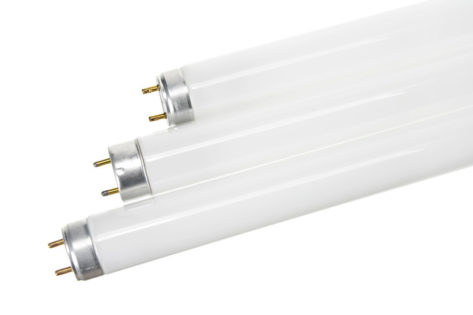
Why Choose Fluorescent Lighting For Your Indoor Hydroponic Garden?
Fluorescent grow lights put out low-intensity light with minimal heat, making them ideal for hydroponic beginners. You won’t risk burning plants, and they’re gentle enough to encourage strong root and leaf development.
🌱 Pro Tip: If you’re just starting hydroponics, pair fluorescent lights with fast-growing crops like lettuce or basil for quick, rewarding harvests.
 | My Top Pick | 1,800+ Reviews |
Plants That Thrive Under Fluorescents
- Lettuce
- Spinach
- Herbs (basil, mint, parsley, cilantro)
- Microgreens
- Seedlings and clones
These crops don’t require intense light and grow beautifully under T5 or T8 setups.
T5 vs. T8: What’s the Difference?
Fluorescent tubes come in different sizes, but for growing plants the two you’ll see most often are T5 and T8. The “T” number just tells you how thick the tube is. A T5 is thinner (about the size of a Sharpie marker), and a T8 is a little wider (about the size of your thumb).
T5 lights – Bright, efficient, and take up less space. They cost a little more but give your plants stronger light.
T8 lights – Cheaper and easier to find in stores. They’re not quite as bright, but still work great for lettuce, spinach, and herbs.
🌱 For beginners: Either will work. If your budget allows, go T5. If you want to keep costs down, T8s are perfectly fine for greens.
Picking the Right Bulbs
Fluorescent bulbs also come in different color temperatures (measured in Kelvin, or “K”). You don’t need to overthink this—just look for the number on the box:
👍 5600–6400K (daylight white): Best for greens and vegetative growth. This is the “go-to” for most hydroponic gardeners.
👎 3000–3500K (warm white): Has more red light, which helps plants flower, but fluorescents are still too weak to grow big fruiting crops.
🌱 Quick tip: For leafy greens and herbs, just grab bulbs in the 5600–6400K range and you’re set.
Pros of Fluorescent Grow Lights
- Lower upfront cost than LEDs or HPS
- Cool running—safe for seedlings and small spaces
- Energy efficient (long life span of 20,000–25,000+ hours)
Drawbacks of Fluorescent Lighting
- Low light intensity—not great for fruiting crops
- Tubes are fragile and can break easily
- Requires replacing bulbs every couple of years for peak performance
Final Thoughts
Fluorescent grow lights are an excellent option for beginners who want to grow leafy vegetables, herbs, or seedlings without spending a fortune. While they won’t deliver enough punch for heavy fruiting crops, they provide a reliable, budget-friendly way to get started with hydroponics. Think of them as your “starter lights”—a great first step before upgrading to LEDs if you expand your garden.
Related Guides
FAQ: Fluorescent Grow Lights
Can I grow tomatoes or peppers under fluorescent lights?
You can start them under fluorescents, but for flowering and fruiting, you’ll need stronger lights like LEDs or HID.
How far should fluorescent lights be from plants?
Keep tubes 2–4 inches above the canopy. Fluorescents are low-intensity, so plants need to stay close for effective growth.
Do I need a reflector with fluorescent grow lights?
Yes—reflectors improve efficiency by directing more light toward your plants instead of wasting it upward.
Are T12 bulbs good for growing plants?
No, T12s are outdated, inefficient, and too dim compared to T5 or T8 options.


Thanks for this advice for getting good fluorescent grow lights. I didn’t know that using fluorescent grow lights could possibly last 25,000+ hours. This seems very useful especially if you want to work on the garden for a very long time.
Glad you found the information useful Taylor, thanks for stopping by!