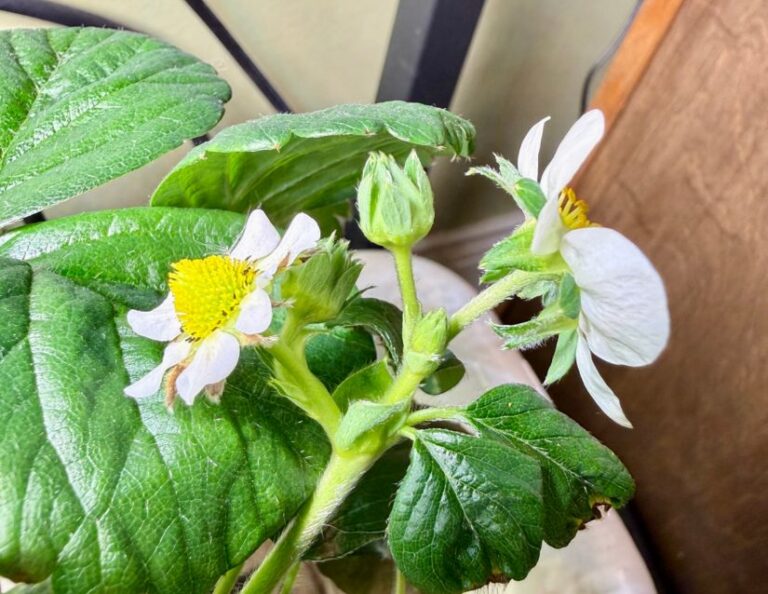
Strawberries are one of my favorite plants to grow hydroponically. They can be a little finicky at times, but once you finally harvest your first batch, it feels incredibly rewarding.
One of the biggest perks of growing hydroponic strawberries is how easy they are to multiply. Strawberry plants naturally produce runners—also called stolons—that grow into brand-new baby plants. With the right timing and a simple setup, you can root these runners and expand your garden without buying more plants.
This guide walks you through exactly how to root strawberry runners using Rapid Rooter plugs, step by step.
How to Know When a Strawberry Runner Is Ready to Root
Before you start, make sure your hydroponic strawberry runners are actually ready.
Flip the runner over and look at the underside of the small plantlet (the baby plant at the end of the runner):
- ✅ Ready to root: You’ll see tiny white nubs or shoots forming
- ❌ Not ready yet: No white growth—give it more time
Those little white bumps are the early root structures. Once you see them, the strawberry runners are ready to root.

Supplies Needed to Root Strawberry Runners
You don’t need anything complicated. Here’s the short list
Rapid Rooter Plugs – These plugs provide an optimal air-to-water ratio to promote healthy root growth.

Propagation Tray – I recommend using a propagation tray to hold your plugs upright and moist. If you don’t have one, a very small Tupperware-style container can also work.

Heat Mat – Warmth increases root growth. Using a heat mat under your Rapid Rooter plugs can significantly improve rooting speed and success.

Also Needed- Strawberry plant producing runners
Step-by-Step: Rooting Strawberry Runners With Rapid Rooter Plugs
Step 1: Soak the Rapid Rooter Plugs
Rapid Rooter plugs must be fully hydrated to trigger root growth.
- Soak plugs in clean water for 30–60 minutes
- They should be moist throughout
 | My Top Pick | 12,700+ Reviews |
Step 2: Set Up the Propagation Tray (or Container)
In my hydroponic strawberry setup, each plant sits in its own pot in an ebb and flow system, which makes it easy to move plants and group runners together.
If you can gather multiple runners in one area:
- Use a propagation tray
If runners are spread out:
- Use small containers with 1–2 plugs per runner
Important:
Keep about ¼ inch of water in the bottom of the tray or container so the plugs stay consistently moist. No hydroponic nutrient solutions needed.
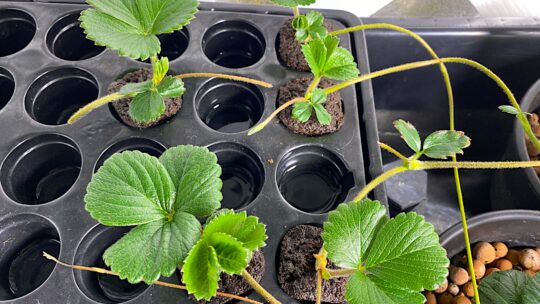
Step 3: Place the Runner on the Rapid Rooter Plug
Leave the runner attached to the mother plant for now.
- Rest the baby plant directly on top of the Rapid Rooter plug
- Position it over the plug’s hole
- Gently open the plug slightly if needed so the runner sits securely
The runner doesn’t need to be buried—just good contact with the moist plug.
Step 4: Cut the Runner From the Mother Plant
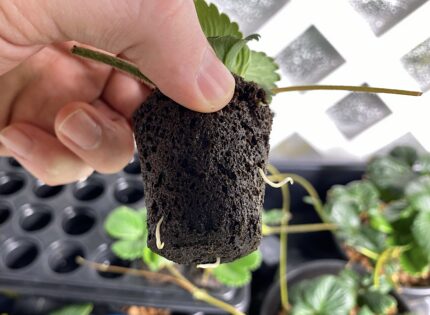
After several days to a couple of weeks, you’ll see roots growing out of the Rapid Rooter plug.
Once roots are clearly visible:
- Cut the runner vine connecting it to the mother plant
- If it was rooted in a small container, move it to the propagation tray
At this point, the new plant is fully independent.
Step 5: Wait Until Roots Are Ready for Transplanting
Don’t rush this step.
Your runner is ready to transplant when:
- Roots are growing out of the plug
- The root system is long enough to reach your nutrient solution
Timing depends on the system you’re moving it into (DWC, NFT, ebb and flow, etc.), but patience here prevents transplant shock.
Common Mistakes to Avoid
- Cutting the runner too early
- Letting plugs dry out
- Submerging the entire plug (they should be moist, not drowned)
- Transplanting before roots are long enough
Related Guides
Final Thoughts
Rooting strawberry runners is one of the easiest and most cost-effective ways to expand a hydroponic strawberry garden. With minimal supplies and a little patience, you can turn one healthy plant into many—and significantly increase your harvest over time.
If you’re already growing strawberries hydroponically, this is a skill worth mastering. Your future self (and your harvest basket) will thank you.