Hydroponic EC used to intimidate me too. The good news? Once you see it as a “strength meter” for your nutrients, it’s easy to manage—and your plants will thank you.

Quick How-To: Measure EC in 4 Easy Steps
- Start clean: Stir your reservoir. If possible, use filtered or RO water to simplify readings.
- Calibrate the meter: Use EC calibration solution as directed. Rinse probe.
- Test the reservoir: Submerge the probe, wait for the reading to stabilize, note the mS/cm value.
- Adjust: If EC is high, add water. If EC is low, add nutrients, mix, and retest.
🌱 Pro Tip: Leave your meter set to mS/cm. PPM can use different conversion scales (500 vs. 700), which causes plenty of headaches later..
What Is Electrical Conductivity (EC)?
EC tells you how strong your nutrient solution is—higher EC = more dissolved nutrient salts. Most hydroponic nutrients are salts that conduct electricity; your meter reads that conductivity and displays it as mS/cm (millisiemens per centimeter).
EC vs. PPM vs. TDS (the short version)
- EC (mS/cm): Universal and consistent. Use this measurement.
- PPM/TDS: Calculated from EC using a conversion factor (often 0.5 or 0.7). Which means- Different devices = different numbers.
Water Quality: Your Starting EC Matters
Tap water carries minerals (like calcium, magnesium, sodium, chloride), so it already has an EC before you add nutrients. Test and note your base EC first, then mix nutrients to your target.
Pure water has an EC near 0. If you want a clean slate, use a reverse osmosis (RO) system. You’ll use less nutrient to hit the same target, and readings are easier to interpret.
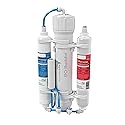 | My Top Pick | 6,100+ Reviews |
How to Measure EC (and Keep It Accurate)
- Use a quality EC meter: A simple, reliable pen-style meter with ATC (automatic temperature compensation) is perfect.
- Calibrate regularly: Follow the manufacturer’s frequency (often weekly or bi-weekly in active grows).
- Rinse the probe with distilled water after use to prevent residue buildup.
- Measure at stable pH: Keep pH in range (typically 5.5–6.5) for consistent, meaningful EC readings.
What To Look For In A Hydroponic EC Meter
Here are the key factors to consider when purchasing a EC meter for your hydroponic garden:
| Feature | Why it matters | Ideal spec / tip |
|---|---|---|
| EC range & resolution | You want a meter that covers the range your nutrient solution will fall in (often from ~0.2–3.0 mS/cm, depending on plant stage) | Look for something with at least 0.01 mS/cm or 0.001 S resolution (or equivalent) |
| Automatic Temperature Compensation (ATC) | Conductivity varies with temperature; ATC helps adjust readings for consistency | Look for meters that include ATC |
| Calibration / drift stability | Meters need periodic calibration; cheaper units drift more often | Replaceable probes and easy calibration routines are advantages |
| Durability / waterproofing | In hydro setups you’ll expose probes to moisture, salts, etc. | Waterproof body, corrosion-resistant electrodes, rugged design |
| Single function vs combo / continuous / smart | Some meters just read EC; others also read pH, TDS, temperature, or integrate with a monitoring system | Decide whether you want one “all-in-one” instrument or separate dedicated meters |
Recommended EC Meters For Your Hydroponic Garden
Blue lab makes top of the line products for hydroponics. If you’re serious about perfecting EC, they make a high quality tester I would highly recommend using.

| My Top Pick | 1,100+ Reviews |
Another quality, less expensive option is the HM Digital HMDCOM 100.
How to Adjust EC (Without Guessing)
If EC is too high: Add plain water, mix, retest. Repeat until within range.
If EC is too low: Add pre-mixed, diluted nutrient solution (never dump concentrate directly into the reservoir). Mix, retest.
Track trends: Log EC, pH, water temp, and top-offs. Patterns tell you what the plants are asking for.
Learn To Read The Reservoir Like a Pro
- Water level drops, EC rises: Plants drank more water than nutrients → top off with water.
- Water level drops, EC falls: Plants pulled nutrients faster → top off with diluted nutes or plan an early change-out.
- EC stable, pH drifting: Check pH control first; then revisit EC targets.
🌱 Pro Tip: Hot rooms & strong lights make plants drink more water than nutrients. Expect EC to drift down. In cooler/low-light conditions, EC may drift up.
Smart Ways to Use EC
- Avoid over/under-feeding: Keep EC in range during veg; bump slightly during bloom/fruiting as plants demand more.
- Hot days = more water: Slightly lower EC can improve water uptake and reduce stress.
- Flavor & quality experiments: Some growers push EC carefully late in fruiting to influence taste/aroma—just watch for tip burn and back off if needed.
Common EC Mistakes (and Easy Fixes)
Relying on PPM: Two growers say “900 PPM” but mean different things. Speak mS/cm and you’ll always align.
Skipping calibration: If the meter isn’t trustworthy, nothing else is. Calibrate.
Pouring concentrate into the bucket: Pre-mix in a jug, then add to the reservoir.
Never changing solution: Plants don’t eat all nutrients equally; partial top-offs can leave imbalances. Do periodic change-outs.
Related Guides
- Deep Water Culture (DWC) – Beginner’s Guide
- Kratky Method – No-Pump Hydroponics
- Hydroponic Cleaning & Hygiene
- Top pH Meter for Hydroponics
FAQ: Hydroponic EC
What’s the best EC for beginners?
Start lower: 0.8–1.2 mS/cm for leafy greens and most herbs. Nudge up as plants mature and if growth slows without signs of burn.
How often should I measure EC?
Daily on small systems (buckets/totes), every 1–2 days on larger reservoirs. Always measure after any top-off or nutrient addition.
My EC keeps rising—what’s wrong?
Likely high evaporation or plants drinking more water than nutrients. Top off with water, lower room temps a bit, and make sure your lids are tight.
Can I just use a TDS/PPM meter?
Yes, but it’s really an EC meter with a conversion. If you use PPM, note your device’s scale (500 or 700) and be consistent. Using mS/cm avoids confusion.
Do I need RO water?
Not required, but helpful if your tap EC is high or fluctuates seasonally. RO gives predictable baselines and can save nutrient costs.
Final Thoughts
When you first start hydroponics, all those numbers — pH, EC, PPM — can feel like alphabet soup. But EC is one of the easiest metrics to get the hang of once you realize it’s just showing how strong your nutrient mix is. Think of it as your garden’s speedometer — keep it in the green zone and you’ll cruise to healthy growth.
Check it regularly, make small adjustments, and pay attention to how your plants respond. Before long, you’ll be able to predict what the reading will be just by looking at your plants — that’s when you know you’re getting good at this.