


Rapid Rooter plugs aren’t just for starting seeds — they’re one of the easiest and most reliable ways to clone plants, especially for beginners.
Thanks to their ideal air-to-water ratio, Rapid Rooters help cuttings root faster while reducing common issues like rot and dehydration. Even better, once your clones are rooted, you can transplant them directly into hydroponic systems or soil without disturbing the roots.
Here’s exactly how to clone a plant using Rapid Rooter plugs, step by step.

Why Use Rapid Rooter Plugs for Cloning?
Rapid Rooters are popular for cloning because they:
- Hold moisture without staying soggy
- Allow plenty of oxygen to reach new roots
- Reduce transplant shock
- Work in hydroponics and soil
- They’re mostly beginner-proof, especially compared to rockwool
If you want higher success rates with less fuss, this is one of the best cloning methods to start with.
Supplies Needed to Clone a Plant Using Rapid Rooter
Rapid Rooter Plugs – These plugs provide an optimal air-to-water ratio to promote healthy root growth.

Propagation Tray – I recommend using a propagation tray to hold your plugs upright and moist. If you don’t have one, a very small Tupperware-style container can also work.

Heat Mat – Warmth increases root growth. Using a heat mat under your Rapid Rooter plugs can significantly improve rooting speed and success.

Rooting hormone – Contains hormones that assist the clone with root production.

Trimmers or Razor blades– Used to make a clean cut on the plant stem (clean cuts root faster)

Also Needed- A healthy mother plant to take cuttings from.
Quick Overview: The Cloning Process
- Rehydrate Rapid Rooter plugs
- Take healthy cuttings from the parent plant
- Apply rooting hormone
- Insert cutting into Rapid Rooter
- Keep warm, lightly moist, and under low light
- Transplant once roots emerge
Step-by-Step: How to Clone Plants Using Rapid Rooter Plugs
1. Rehydrate the Rapid Rooter Plugs
Before cloning, soak your Rapid Rooter plugs in distilled or clean water for 1–2 hours.
- Gently squeeze excess water out
- Plugs should be moist, not dripping
- Place them into your cloning tray
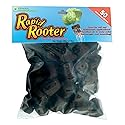 | My Top Pick | 12,700+ Reviews |
2. Take Healthy Cuttings
Choose a healthy, pest-free plant with strong growth.
- Cut a stem at least 2–4 inches long
- Ensure it has 2–4 healthy leaves
- Remove lower leaves so the bottom inch of stem is bare
- Make the final cut at a 45-degree angle
This angled cut increases the surface area for rooting.

3. Apply Rooting Hormone
Instead of dipping the cutting directly into the original bottle:
- Pour a small amount of rooting gel into a separate container
- Dip the bottom inch of the cutting into the gel
- Lightly coat — more is not better

This prevents contamination and keeps your rooting hormone usable longer.
 | My Top Pick | 3,800+ Reviews |
4. Insert the Cutting into the Rapid Rooter
- Gently insert the treated stem into the pre-formed hole
- Push it in just deep enough to stand upright
- Lightly press the plug closed around the stem
Do not force or bend the cutting.

5. Set Up the Cloning Environment
Place the tray:
- On a flat surface
- With a heat mat underneath (if using)
- Under low-intensity light (indirect light or dim grow light)
Keep conditions stable:
- Temperature: 70–80°F
- Light: 16–18 hours/day (low intensity)
- Water: Maintain ~¼ inch of water in the tray bottom
The plugs should stay moist but never submerged.

Optional:
A humidity dome can help prevent leaf wilt in the first few days, especially in dry environments.
6. Monitor and Wait for Roots
- Roots typically appear in 7–14 days
- Some plants may take up to 3 weeks
- Avoid tugging on the cutting — let roots show naturally
Once you see roots growing out of the bottom or sides of the plug, your clone is ready.
When to Transplant Rapid Rooter Clones
Your clone is ready to transplant when:
- Multiple white roots are visible
- Roots extend beyond the plug
- The cutting looks firm and upright
You can transplant directly into:
- DWC systems
- NFT systems
- Ebb & Flow
- Kratky
- Soil containers
No need to remove the plug — just place the entire Rapid Rooter where it belongs.
Common Cloning Mistakes to Avoid
- Keeping plugs too wet- Causes rot.
- Using dull or dirty blades- Increases the chance of infection.
- High-intensity lighting- Too much for clones.
- Letting cuttings dry out- Clones need moisture to root.
- Skipping rooting hormone unnecessarily- Using root hormone increases the chances of success.
Frequently Asked Questions (FAQ)
How long does it take for clones to root in Rapid Rooter plugs?
Most plant cuttings begin forming roots within 7–14 days. Some slower-growing plants may take up to 3 weeks, depending on temperature, humidity, and plant type.
Do I need a heat mat to clone with Rapid Rooters?
A heat mat is not required, but it significantly improves success rates. Keeping the root zone around 75–80°F helps trigger faster and healthier root development, especially in cooler rooms.
Should I use a humidity dome when cloning?
A humidity dome is optional but helpful, especially during the first few days. It prevents cuttings from drying out before roots form. If you use one, briefly remove it daily to allow fresh air exchange.
How wet should Rapid Rooter plugs be?
Rapid Rooter plugs should be moist, not soaking wet. There should be no standing water inside the plug itself. Too much water can lead to stem rot and failed clones.
Can I clone plants without using rooting hormone?
Yes, but rooting hormone greatly improves success rates and speeds up rooting. Beginners especially benefit from using a rooting gel or powder for more consistent results.
What kind of light do clones need?
Clones prefer low-intensity light. Bright grow lights can stress cuttings before roots develop. Indirect light or a dimmed grow light for 16–18 hours per day works best.
When should I transplant my clone?
Transplant once white roots are visible growing out of the plug. At that point, the clone is strong enough to move into a hydroponic system or soil without transplant shock.
Can Rapid Rooter plugs be used in hydroponic systems?
Yes. Rapid Rooter plugs can be placed directly into DWC, NFT, Kratky, Ebb & Flow, or even soil systems without removing the plug.
Why are my clones wilting after cutting?
Wilting usually happens because the cutting is losing moisture faster than it can absorb it. This is normal early on but can be reduced by:
- Using a humidity dome
- Keeping light intensity low
- Ensuring the plug stays lightly moist
How many clones can I take from one plant?
That depends on the plant’s size and health. As a rule of thumb, never remove more than 25–30% of a plant at once to avoid stressing the parent plant.
Final Thoughts
Cloning plants with Rapid Rooter plugs is one of the simplest and most reliable propagation methods for hydroponic growers. With minimal equipment and a little patience, you can turn one healthy plant into many — all without complicated setups or expensive gear.
If you’re just getting started with cloning, this method delivers consistent results without the frustration.


thanks for rapid rooter plugs just stated growing in tent need he,p with it don’t mind paying