


Using a pH meter is the easiest way to keep your hydroponic nutrient solution in the sweet spot — but only if your meter is properly calibrated. Even the best meter will drift over time. Luckily, calibrating is simple once you know how.
This guide covers both types of meters:
- Manual screw calibration (requires a small screwdriver)
- Electronic button calibration (uses a “CAL” or “Mode” button)
How Often Should You Calibrate Your Hydroponic pH Meter?
| Usage Pattern | Calibration Frequency |
|---|---|
| Every day | Once per week |
| A few times per week | Every other week or once per week |
| Less frequent use | Once per month (or before important checks) |
🌱 Pro Tip: Recalibrate after changing batteries, replacing the probe, long storage, rough handling, or whenever readings seem “off.”
Single-Point vs Dual-Point Calibration (and Why Buffers Matter)
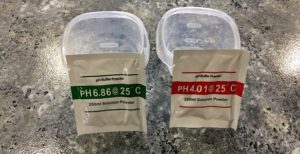
About Buffer Solutions
A buffer is a special liquid with a stable, exact pH (4.0, 7.0, or 10.0). They’re made in labs and sold ready-to-use in bottles or powder packets you mix with distilled water. Buffers are the “yardstick” for your pH meter — without them, your meter doesn’t know what’s truly 7.0 or 4.0.
🌱 Pro Tip: Always use fresh buffer solution and if mixing from packets only use distilled water.
Single VS Dual Calibration
pH meters don’t all calibrate the same way. Some only use one buffer solution (usually pH 7.0), while others use two buffers (commonly pH 7.0 and 4.0 for hydroponics).
- Single-point calibration: Quick, but less accurate. The meter assumes its slope is perfect, so readings can drift by 0.2–0.4 units at the acidic levels (5.5–6.5) where hydroponic nutrients live.
- Dual-point calibration: More accurate. By setting both neutral (7.0) and acidic (4.0), the meter corrects for probe wear and slope, keeping readings reliable where it counts most.
Think of it like a scale: single-point just checks “zero,” while dual-point checks “zero” and “ten pounds,” so everything in between is accurate. For beginners, dual-point is worth the extra minute to avoid nutrient lockout.
 | My Top Pick | 1,300+ Reviews |
What You’ll Need To Calibrate Your Hydroponic ph Meter
- Your pH meter (manual or button type)
- Fresh pH buffer solutions: typically 7.0, plus either 4.0 or 10.0 (most hydro growers use 7.0 & 4.0)
- Small clean containers (don’t dip into the original buffer bottles)
- Distilled water for rinsing
- Probe storage solution (to keep the tip moist)
- If manual: a small flathead screwdriver
Step 1: Inspect & Rinse the Probe
- Check the probe for cracks, buildup, or cloudiness.
- Rinse with clean water. If dirty, gently clean with pH probe cleaning solution (avoid abrasives).
- Always rinse before and between buffer solutions to prevent contamination.
Step 2: Calibration Of Your Hydroponic pH Meter
Manual Calibration (Screwdriver Type)
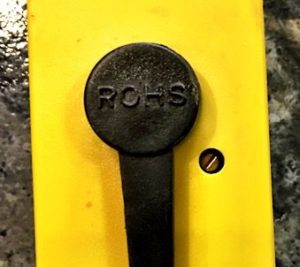
- Turn on your meter.
- Place the probe in pH 7.0 buffer. Wait until the reading stabilizes.
- Use the screwdriver to adjust the calibration screw until the display reads exactly 7.0.
- Rinse the probe and repeat in your second buffer (usually 4.0). Adjust until it reads correctly.
- Rinse and store the probe in storage solution when done.
Electronic Calibration (Button / “CAL” Type)
- Turn on the meter and set it to pH mode.
- Rinse the probe and place it in pH 7.0 buffer. Wait for the reading to stabilize (30–60 seconds is common).
- Press and hold the CAL / Mode / Set button until the display confirms (often flashes or shows “7”).
- Rinse the probe, then place it in your second buffer (pH 4.0 or 10.0).
- Press and hold CAL again until the display confirms the second point (e.g., “4” or “10”).
- The meter should indicate that both calibration points are set. Rinse and store the probe properly.
Step 4: Proper Storage of Your Hydropnic pH Meter
Once your pH meter is calibrated, how you store it makes a big difference in how long the probe lasts and how accurate it stays.
- Keep the probe tip moist: Always store it in a special pH storage solution or the manufacturer’s recommended liquid. Never store it dry.
- Avoid plain water: Storing in distilled or tap water can damage the probe and shorten its lifespan.
- Use the cap: If your meter came with a storage cap, fill it with storage solution and keep it snug on the probe tip when not in use.
- Upright if possible: Store your meter upright to keep the probe tip submerged in solution and reduce leaks.
🌱 Pro Tip: A properly stored probe can last a year or more, while a dried-out probe may be ruined in a week. Taking a minute to store your meter right saves money and frustration later.
 | My Top Pick | 2,200+ Reviews |
Troubleshooting pH Meter Calibration
Meter won’t stabilize? Clean the probe and use fresh buffer solution.
Still inaccurate? The probe may be old or damaged. Probes wear out; replace if needed.
Drifts quickly? Always store the tip moist in storage solution (not plain water).
Related Guides
- Top 5 pH Meters For Hobby Hydroponics
- Hydroponic Nutrients: Beginner’s Guide
- How To Maintain A Hydroponic Reservoir
- How To Adjust ph Of Hydroponic Nutrient Solutions
FAQ: Calibrating Hydroponic pH Meters
Can I use tap water to rinse my probe?
It’s best to use distilled or deionized water. Tap water can leave mineral deposits that affect accuracy.
How long do buffer solutions last?
Once opened, replace them every 6–12 months. Discard if cloudy, discolored, or contaminated.
Do I need to calibrate if I only measure near neutral pH?
Yes. Drift happens. At minimum, do a 7.0 calibration weekly; dual-point is better for overall accuracy.
What if my meter only has a single CAL button?
Follow the prompts — most models recognize pH 7.0 first, then pH 4.0 or 10.0 automatically once the reading stabilizes.



Very helpfull to me to calibarate my ph meter