


After your seedlings settle into their hydroponic system, the real fun begins—the vegetative stage.
This is when your plants pack on size, growing stems, branches, and leaves at lightning speed. Think of it as your plant’s teenage growth spurt: all energy is going into getting bigger and stronger.
Getting nutrients right during this stage sets the foundation for healthy flowering and fruiting later. Here’s what your hydroponic plants need and how to give it to them.

Quick Guide: Vegetative Stage Nutrients
When plants are in veg, your main goals are leafy, vigorous growth and strong roots.
- Focus on Nitrogen (N)
Fuels leafy green growth and photosynthesis. - Balance with Phosphorus (P) & Potassium (K)
Still needed—just usually in lower ratios than nitrogen during veg. - Choose Your Nutrient Regimen
- One-part = simple and beginner-friendly.
- Multi-part = more control and flexibility.
- Watch for Deficiencies
- Yellowing older leaves can mean low nitrogen.
- Avoid Toxicity
- Burnt tips / dark, overly lush leaves can mean too much nitrogen or overall EC.
Nutrients Needed During the Vegetative Stage
Plants use the same essential minerals (N, P, K, calcium, magnesium, micronutrients) throughout their life. What changes is the ratio they prefer at each stage.
During the vegetative stage, nitrogen is the MVP.
Why Nitrogen Matters
Nitrogen helps plants build:
- Strong stems and leaves
- Chlorophyll (the green pigment that drives photosynthesis)
- Overall structure to support future flowers and fruit
More chlorophyll = more sunlight captured = faster growth.
If you want lush, leafy plants that fill out your system, nitrogen is your best friend.
🌱 Pro Tip: Nitrogen- Too little, and growth stalls. Too much, and the plant gets big and “bulky” but can struggle later in flowering.
Best Hydroponic Nutrient Regimens for Vegetative Growth
You’ve got two main paths here: simple one-part or flexible multi-part.
One-Part Nutrient Solution (Simple Route)
If you like to keep things easy, Superthrive (formerly Dyna-Gro) makes a great one-part option.
Two standout formulas for veg:
Foliage-Pro
- Great for leafy greens and herbs where flowering isn’t the goal.
- High in nitrogen with a balanced ratio for vegetative growth.
Grow Formula
- Better for plants that will eventually flower and fruit (tomatoes, peppers, cucumbers, etc.).
- Sets them up with strong growth early so they can carry the load later.

| My Top Pick SuperThrive Foliage Pro Hydroponic Nutrients | 600+ Reviews |
Both products are nitrogen-forward and geared for the vegetative stage.
If you’re mostly growing lettuce, kale, basil, or other leafy crops, Foliage-Pro can carry you from start to harvest. For fruiting plants, use a veg formula now and plan to switch to a bloom formula once flowering starts.
Multi-Part Nutrient Solution (More Control)

If you want fine-tuned control, the General Hydroponics Flora Series is my go-to 3-part system:
For vegetative growth, you’ll use a recipe that:
- Emphasizes FloraGro (more nitrogen)
- Includes FloraMicro for micronutrients
- Uses FloraBloom in smaller amounts
Just follow the General Hydroponics feeding chart for the vegetative stage and adjust slightly based on how your plants respond.
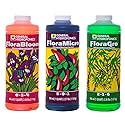 | My Top Pick | 7,500+ Reviews |
🌱 Pro Tip: When switching stages or changing strength, do a fresh reservoir change instead of endlessly topping off. It keeps nutrient ratios closer to what the label intends.
Can Plants Get Too Much Nitrogen?
Yes, absolutely.
Overdoing nitrogen during veg can cause:
- Leaf tip burn (crispy, brown edges or tips)
- Very dark, overly lush foliage
- Weak stems and delayed or poor flowering later
- Higher susceptibility to pests and disease in some cases
In hydroponics, it’s easy to think, “more food = faster growth,” but there’s a limit.
Balance is key:
- Start at or slightly below the recommended strength for your nutrient line.
- Watch how the plants respond over a few days.
- Adjust gradually, not dramatically.
🌱 Pro Tip: If plants look healthy, slightly lighter green (not yellow), and are growing fast, you’re probably right in the sweet spot. Dark, stiff leaves and burnt tips usually mean you’re pushing too hard.
What Happens If Plants Don’t Get Enough Nitrogen?
Nitrogen deficiency is one of the most common issues during veg, especially if you’re going too light on nutrients.
Signs of nitrogen deficiency:
- Older leaves turn pale green to yellow
- Newer leaves may stay greener but smaller
- Overall plant looks weak and stunted
- Growth slows way down
Left unchecked, your plants will:
- Stay small
- Produce fewer branches and leaves
- Be less productive when it’s time to flower and fruit
FAQs About Vegetative Stage Nutrition
How long does the vegetative stage last in hydroponics?
For many crops, the vegetative stage lasts about 3–6 weeks, depending on:
- The plant type
- Your goals (compact vs big bushy plants)
- Light intensity and overall environment
Leafy greens may spend most of their life in vegetative mode. Fruiting plants stay in veg until they’re big enough to support a good yield.
What’s the best N-P-K ratio for vegetative growth?
There’s no single magic ratio, but higher nitrogen compared to phosphorus and potassium works well for veg—something in the neighborhood of: 3-1-2 or 2-1-2
Most reputable veg formulas already land in that ballpark. It’s usually more important to:
- Use a veg-labelled nutrient
- Keep your EC/ppm appropriate for the crop
- Maintain pH in the right range (5.5-6.5)
Do leafy greens need a different nutrient mix than fruiting plants?
Yes—at least in how you use the nutrient.
- Leafy greens & herbs-Thrive on nitrogen-rich formulas. Often don’t need a separate “bloom” stage because you harvest them for leaves.
- Fruiting plants (tomatoes, peppers, cucumbers, strawberries)-Do best when you use a veg-focused formula early on then shift to a bloom formula with lower nitrogen and higher P & K once they start flowering.
You can use the same brand line for both—just different bottles or feeding recipes depending on the plant’s stage.
Other Stages Of Hydroponic Growth Guides
The Flowering Stage Of Hydroponics
The Fruiting Stage Of Hydroponics
Takeaway
The vegetative stage is all about building a strong foundation.
The more healthy stems and leaves your plant grows now, the more space it has to:
- Support flowers
- Hold fruit
- Handle a little stress without falling apart
Get your nitrogen level right, choose a nutrient regimen that matches your style (simple one-part or flexible multi-part), and watch for early signs of deficiency or excess. Do that, and you’ll set your hydroponic garden up for a smooth transition into the flowering stage.




Michael.
Thank you so much for all of your very helpful information. I really appreciate the fact that you keep it simple. That’s very helpful to me. I have had a grow room for about three years. My plantlets are just being transplanted into nutrients of FloraMicro, FloraGrow, FloraBloom, Floralicious, FloraBlend, Cool Bloom, Magical & Rapid Start. Would you be able to give me your comments of how I am using these. I follow the directions for general growth which for the first three of these it says to use one teaspoon per gallon. Would you have any suggestions for variations on what I am doing with these nutrients.
Thanks for visiting and sharing some feedback Wally! The nutrient regimen to use is going to be determined by what you’re growing and what stage of growth it’s in. I would check out this recommended feed chart for the Flora Series. It will give you a better idea of how much to use of each nutrient and supplement each week for optimum growth.
Hey Michael, I’m growing bibb lettuce indoors hydroponically using DWC with an airstone. I have some under LED lights and some under T-5s.I’ve had some leaftip burn almost every time I grow summer and winter. I use MAXGRO and Miracle grow liquid from aerogarden, and it dosen’t seem to matter. What am I doing wrong??
Hi Joe!
Tip burn can be caused by several environmental factors. I don’t have an article on tip burn yet but here is a pretty good reference article.