


How close is too close? In hydroponics, plants don’t compete for water or nutrients the way they do in soil—but they still compete for light and airflow. Get spacing right, and you’ll grow more in less space with fewer headaches.

Quick Reference: Hydroponic Plant Spacing Chart
Centers = hole-to-hole distance. Choose the smaller end if you’ll prune/train; the larger end if you’ll “let it go.”
| Plant / Category | Typical Spacing (centers) | Common Net Pot Size | Notes |
|---|---|---|---|
| Lettuce (bibb/butterhead) | 6–8 in (15–20 cm) | 2–3 in | Great for rafts/NFT. Trim outer leaves to keep heads tidy. |
| Lettuce (romaine/leaf) | 6–10 in (15–25 cm) | 2–3 in | Go wider (8–10 in) for full heads; tighter for baby leaf. |
| Spinach, Arugula, Asian greens | 5–8 in (12–20 cm) | 2 in | Cut-and-come-again = tighter spacing works well. |
| Herbs (basil, cilantro, parsley) | 8–10 in (20–25 cm) | 2–3 in | Top/prune regularly for bushy growth and light penetration. |
| Mint, oregano, thyme (sprawlers) | 10–12 in (25–30 cm) | 2–3 in | Can overtake neighbors; prune hard or isolate. |
| Tomatoes (indeterminate) | 10–14 in (25–35 cm) | 3–5 in | Single/double-leader training; trellis. One plant per 5-gal DWC bucket. |
| Tomatoes (determinate/compact) | 10–12 in (25–30 cm) | 3–5 in | Less pruning required; still needs good airflow. |
| Peppers (bell/chili) | 10–12 in (25–30 cm) | 3–5 in | Stake or trellis; remove interior leaves for airflow when dense. |
| Cucumbers | 12–16 in (30–40 cm) | 3–5 in | Vertical trellis keeps footprint small; pinch side shoots as needed. |
| Strawberries | 8–10 in (20–25 cm) | 2–3 in | Great in towers/NFT; trim runners if space is tight. |
| Microgreens (dense grow) | N/A (tray) | — | Grown as a mat—spacing is by tray density, not net pots. |
Pro Tip: If you’re unsure, pick the wider spacing for your first run. As you get comfortable with pruning/training, you can gradually tighten spacing.
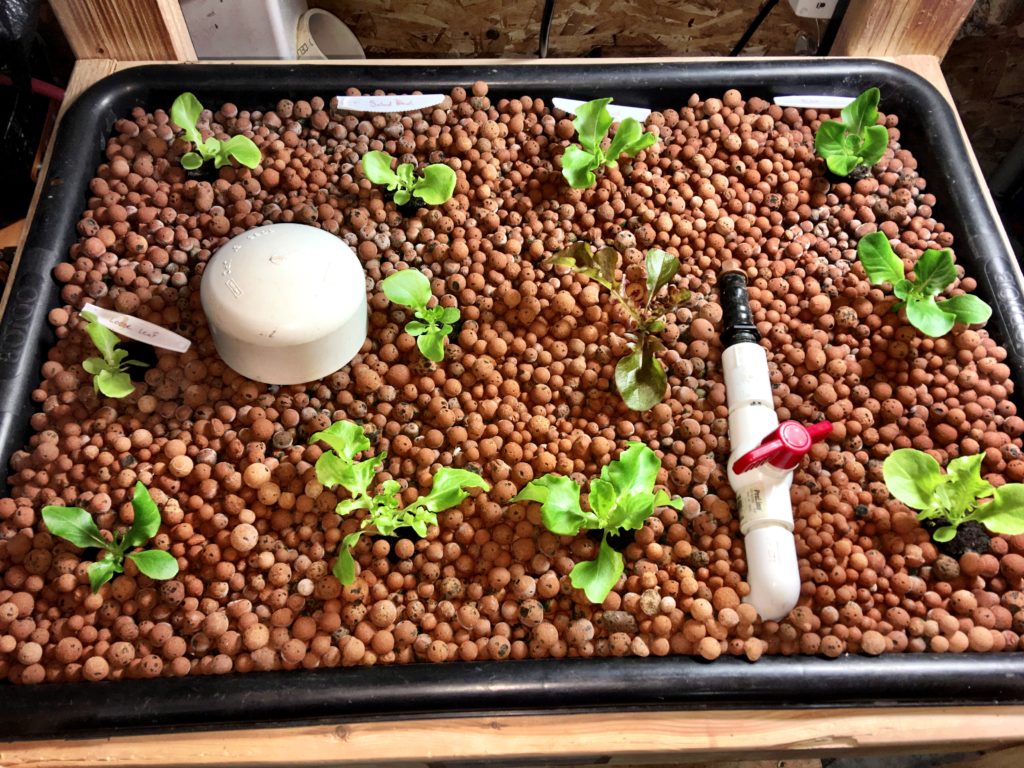
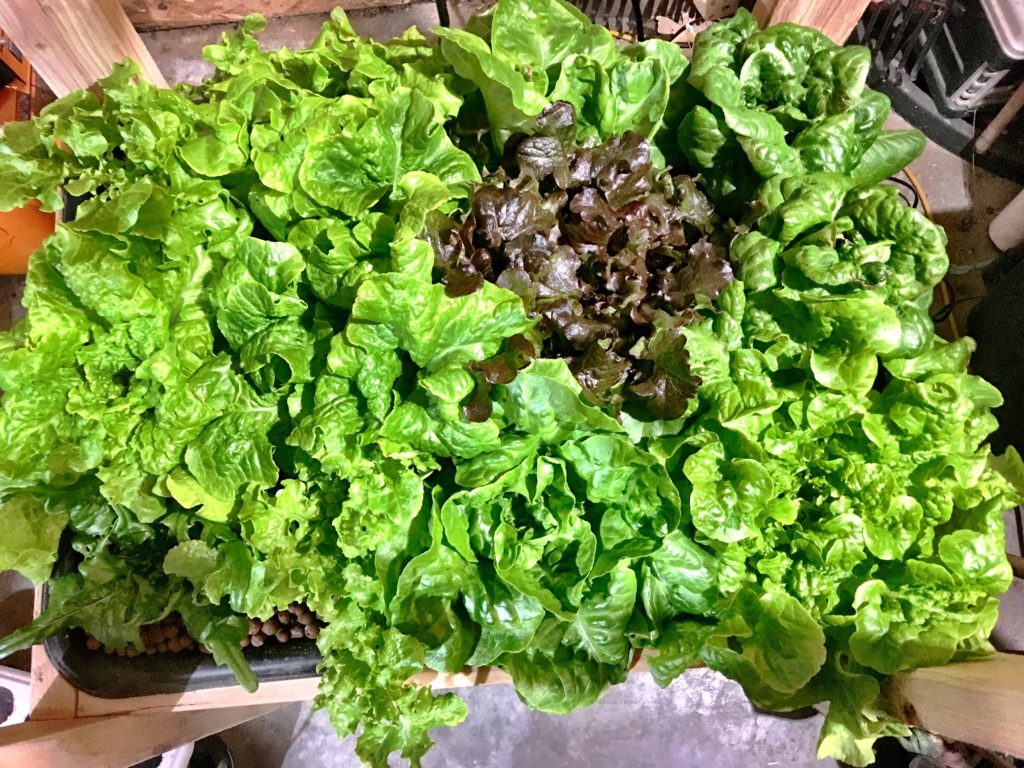
Here’s some lettuce I was growing in my garage.
A few weeks later…
Why Hydroponic Spacing Differs from Soil
In soil, roots wander to find moisture and nutrients. In hydro, roots get everything delivered—so root systems can happily intertwine without competing. That means you can place plants closer than in dirt. The limits become:
- Light — leaves need unshaded light to photosynthesize efficiently.
- Airflow — stagnant, crowded foliage invites pests and disease.
- Access — you still need room to inspect roots and harvest comfortably.
Root Space vs. Vegetative Space
Root zone: Less of a constraint in hydroponics. Deliver oxygen, nutrients, and circulation, and roots “play nice.”
Vegetative zone: The real bottleneck. Leaves expand to harvest light. Plan spacing around the mature canopy size you want—then manage it with pruning and training.
System-by-System Spacing Tips
Raft / DWC (Deep Water Culture)
- Raft hole grids: 6″, 8″, 10″, or 12″ centers are common. On a 2’×4′ raft: ~32 holes at 6″, 18 holes at 8″, 8 holes at 12″.
- DWC buckets: One large plant per 5-gallon bucket; space buckets 10–18″ apart depending on pruning/trellis.
 | My Top Pick | 1,400+ Reviews |
NFT (Nutrient Film Technique)
- Lettuce/herbs: 6–8″ between sites works well. Stagger channels so heads don’t shade each other.
- Fruiting crops: Use fewer sites with trellising, or move fruiting plants to buckets/Dutch buckets.
Dutch Buckets / Bato
- One plant per bucket for tomatoes, peppers, cukes. Space buckets 12–18″ and trellis vertically to save floor space.
Vertical Towers
- Check port spacing from the manufacturer; most suit lettuce/herbs with ~6–10″ canopy. Avoid planting heavy sprawlers in adjacent ports.
Pro Tip: Lights matter! If your light’s effective footprint is 2’×4′, design your plant layout to fit inside that footprint so edge plants don’t lag.
3 Factors That Change Spacing
1) Plant Type & Growth Habit
Leafy greens can sit tight; vining or bushy fruiting plants need elbow room. Use the chart above as your baseline.
2) Pruning
Overlapping leaves shade each other and slow growth. Pruning shapes the canopy so light reaches more leaves, letting you plant closer without stunting.
- Lettuce: Harvest outer leaves regularly to maintain head shape.
- Basil & herbs: Top at 5–6 nodes to encourage bushy growth.
- Tomatoes: Train to one or two leaders; remove suckers below fruiting clusters.

| My Top Pick | 56,000+ Reviews |
3) Training
Grow up to save space. Trellises, clips, and simple strings turn tomatoes and cucumbers into tidy columns. You can even grow large plants horizontally and let shoots rise vertically, but vertical training is easiest for beginners.
Pro Tip: Tight on space? Choose compact varieties (determinates, dwarf peppers, mini cukes). Genetics + training beats wrestling a jungle.
How to Plan Your Hydroponic Plant Spacing (No Math Headache)
- Pick your plants and note their mature size (from the chart or seed packet).
- Decide your style: hands-off (wider spacing) or prune/train (tighter spacing).
- Map your system: choose raft hole centers, NFT site spacing, or bucket distances.
- Leave a buffer: add ~10–20% space for airflow and maintenance access.
- Stagger harvests: harvest/replace every 1–2 weeks to keep density manageable.
Common Spacing Mistakes (and Easy Fixes)
- Too tight, no pruning: Slow growth, tip burn, mildew. Fix: thin or prune to open the canopy.
- Ignoring light footprint: Edge plants lag. Fix: group plants under the brightest area or raise/center the light.
- Zero airflow: Stagnant leaves invite issues. Fix: add a small circulation fan.
Hydroponic Plant Spacing: FAQs
Can you space hydroponic plants closer than in soil?
Yes. Because roots aren’t competing for water or nutrients, you can go tighter—as long as light and airflow aren’t blocked. Pruning and vertical training make close spacing work.
What’s the best spacing for lettuce in hydroponics?
6–8 inches center-to-center for most bibb/butterhead types. Go 8–10 inches for full romaine heads, or tighter for baby leaf harvests.
How far apart should tomatoes be in a hydroponic system?
10–14 inches between sites if trained to 1–2 leaders with a trellis. In DWC buckets, use one plant per 5-gallon bucket and space buckets 10–18 inches apart.
Do net pot sizes change spacing?
Pot size (2″, 3″, 5″) matches plant size and support needs, but spacing is driven mostly by canopy width, not pot diameter.
How do lights affect spacing?
Match plant density to your light’s usable footprint. If PPFD drops at the edges, either reduce plants, shift the layout, or upgrade/raise the light for uniform coverage.
What if my system’s holes are already too close?
Alternate empty sites, stagger plantings, or run smaller crops (e.g., lettuce instead of tomatoes) in that system. You can also cap holes or add a second raft with wider centers.
Final Thoughts
Hydroponics gives you flexibility. Choose a spacing range from the chart, then use pruning and vertical training to keep canopies open and happy. You’ll grow more, with fewer problems—no sprawling jungle required.



Great article Michael. What size net pot should I use for growing romaine lettuce, tomatoes, cuvumber and bell peppers in a dwc raft (11/2″ polystyrene) hydroponic system?
Hey Patrick!
Typically the large the plant, the larger the net pot you should use. The wider and deeper net pots help keep large/tall plants from tipping. I typically use 2-3 in. net pots for lettuce. Cucumbers are usually fine in 3 in. net pots with them vining.
With the larger pepper and tomato plants, any net pot will work with the type of hydroponic system you’re using.The main concern will be support for the weight of the top of the plant which is going to do all the work of holding up the plant.These plants will get heavy so make sure they are balanced out on your raft. Make sure to share some pictures when you get it going!